
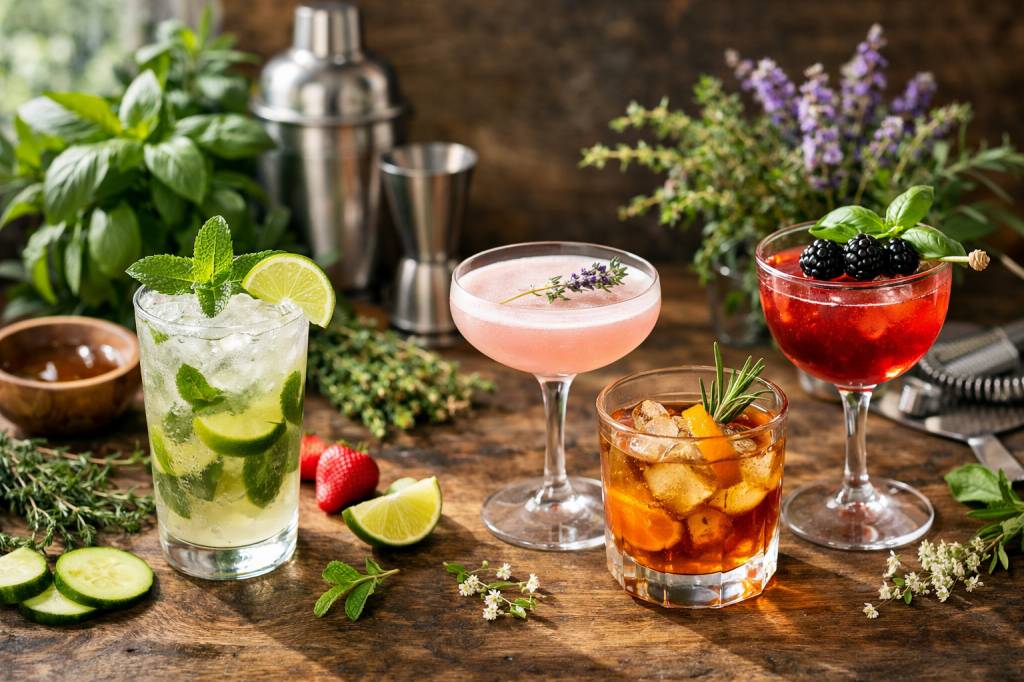
Fresh herbs are one of the fastest ways to make your cocktails taste like they came from a craft bar instead of your kitchen counter. One sprig of thyme or basil can flip a basic gin and tonic into something you’d actually serve at a dinner party.
The trick is simple: stop thinking of herbs as just “garnishes” and start treating them as ingredients with real structure, aroma, and seasonality. In other words: you don’t just drop a mint leaf on top for the photo — you build the drink around it.
In this article, we’ll walk through which seasonal herbs to use, how to pair them with spirits, and a few easy recipes that can turn your usual two-ingredient pour into a signature cocktail. No fancy equipment, no rare bottles, just smart use of what’s growing right now.
Why herbs instantly elevate a cocktail
When I first started mixing drinks, I thought the “herb thing” was mostly for show. Then I muddled basil into a strawberry daiquiri and realized I’d been underestimating what fresh green aromatics can do.
Herbs add three things most home cocktails are missing:
- Aroma: Before you taste a drink, you smell it. Fresh herbs hit your nose first and set the stage.
- Bitterness & structure: A touch of bitterness balances sweet and sour, so your drink doesn’t taste like candy.
- Seasonal character: Mint screams summer, rosemary feels like winter holidays, basil is pure late August.
Use herbs on purpose and suddenly your “just threw this together” gin lemonade has a point de vue.
Spring herbs: bright, green, and gently aromatic
Spring is about waking your palate up after heavy winter flavors. Here, you want delicate, green, almost floral notes.
Herbs to reach for in spring:
- Mint: Clean, cooling, and familiar. Great with rum, gin, tequila, and low-ABV spritzes.
- Basil (especially sweet basil): Peppery, slightly anise-like, perfect with citrus and berries.
- Tarragon: Subtle licorice note that loves gin, dry vermouth, and sparkling wine.
- Chive blossoms (for the adventurous): Light onion-floral touch, best in savory brunch cocktails like Bloody Mary variations.
A quick story: one early spring, I ran out of limes in the middle of a mojito craving (classic home bartender problem). I swapped the lime-heavy recipe for lemon juice, added a few basil leaves with the mint, and it turned into this bright, herbaceous lemon-mint-basil cooler I now remake every year when the first herbs show up at the market. “Ran out of ingredients” is still my most reliable recipe developer.
Summer herbs: bold, fruity, and cocktail-party friendly
Summer is when herbs are at their peak — and when we’re all drinking long, cold, refreshing things. This is the moment to be generous with handfuls of green.
Herbs that shine in summer:
- Basil (all varieties): Especially good with strawberries, watermelon, peach, and tomato-based cocktails.
- Mint (again): Mojitos, juleps, iced tea cocktails, you name it.
- Cilantro: Great with tequila, mezcal, lime, and spicy syrups for a taco-night margarita twist.
- Lemon balm: Gentle lemon-herbal note, perfect in spritzes and vodka sodas.
- Shiso (if you can find it): Bright, slightly minty, a little basil-like; fantastic with gin and sake.
In July, I like to treat herbs as a base flavor, not just a finishing touch. If I’m making a pitcher of sangria or a big-batch spritz, I’ll throw in a literal handful of basil and let it steep in the fridge for an hour before serving. The difference between “wine with fruit” and “wow, what is in this?” is usually just that extra infusion step.
Autumn & winter herbs: woodsy, warming, and complex
When the weather cools down, it’s time to swap the ultra-fresh mint explosion for deeper, woodier herbs that echo roasted vegetables and slow-cooked dinners.
Cold-weather MVPs:
- Rosemary: Piney, resinous, incredible with gin, grapefruit, and anything sparkling.
- Thyme: Earthy and subtle; pairs well with whiskey, apple, and pear.
- Sage: Slightly savory and soft; game-changing in gin, mezcal, and brown-butter-style syrups.
- Bay leaf: More for infusions and syrups than muddling, but adds depth to rum and whiskey drinks.
My gateway moment with winter herbs was a simple gin and tonic I made on a December night with nothing but a strip of orange peel and a small rosemary sprig. I torched the rosemary lightly before adding it — the kitchen smelled like a forest for about five minutes, and the drink tasted twice as cozy.
How to actually get flavor out of herbs
Dropping a lonely sprig in a glass does almost nothing. To make herbs earn their keep, you need to extract their oils. Three easy methods:
- Gentle muddling: Add herbs to the shaker or mixing glass with citrus and/or syrup. Press lightly with a muddler or the back of a spoon. You’re bruising, not grinding. Over-muddling = bitter, grassy.
- Herb-infused syrups: Make a simple syrup (1:1 sugar and water), remove from heat, then add a big handful of herbs. Steep 15–30 minutes, strain, cool. Keeps about 1–2 weeks in the fridge.
- Infused spirits: Add clean, dry herbs to a bottle of neutral spirit (vodka, gin, light rum). Start with 1 small handful per 750 ml. Taste after 24 hours; strain when it’s fragrant but not harsh.
For an easy win, start with syrups. They’re harder to mess up, and you can use them in cocktails, mocktails, and even over fruit or yogurt.
Simple seasonal herb cocktails to try
Here are a few straightforward recipes that show how herbs can transform basic builds. All measurements are in ounces; feel free to batch for a crowd.
Strawberry Basil Vodka Smash
This is one of my go-to “I have fruit and basil that needs using” cocktails. It tastes like a grown-up strawberry lemonade with a green twist.
- 2 oz vodka
- 0.75 oz fresh lemon juice
- 0.75 oz simple syrup (or strawberry syrup if you have it)
- 2–3 fresh strawberries, hulled and sliced
- 5–6 basil leaves
- Soda water to top (optional)
Method:
- Add strawberries, basil, and simple syrup to a shaker.
- Muddle gently until the strawberries are broken down and the basil is fragrant.
- Add vodka, lemon juice, and ice. Shake hard for 10–12 seconds.
- Strain into an ice-filled rocks glass. Top with a splash of soda if you want it longer.
- Garnish with a basil sprig and a strawberry slice.
Grapefruit Rosemary Gin Highball
Perfect for those first chilly-but-sunny days. Bright citrus with just enough piney backbone from the rosemary.
- 1.5 oz gin
- 1.5 oz fresh grapefruit juice
- 0.5 oz rosemary simple syrup
- Soda water to top
- Small rosemary sprig (fresh)
Rosemary simple syrup: Simmer 1 cup water + 1 cup sugar. Remove from heat, add 4–5 small rosemary sprigs. Steep 20 minutes, strain, chill.
Method:
- In a shaker, combine gin, grapefruit juice, and rosemary syrup with ice.
- Shake briefly just to chill.
- Strain into a tall glass filled with ice.
- Top with soda water and stir gently.
- Lightly slap a rosemary sprig between your palms to release aroma and use as garnish.
Smoky Sage Margarita
This is what you make when you want a margarita that tastes like it belongs next to a bonfire in late October.
- 1.5 oz mezcal (or split 1 oz mezcal + 0.5 oz tequila blanco)
- 0.75 oz fresh lime juice
- 0.75 oz agave syrup
- 3–4 fresh sage leaves
- Optional: small pinch of salt
Method:
- Add sage leaves and agave syrup to a shaker.
- Muddle gently to bruise the sage.
- Add mezcal, lime juice, ice, and a tiny pinch of salt.
- Shake hard, then fine-strain into a rocks glass over fresh ice.
- Garnish with a single sage leaf. If you want to go extra, lightly singe the edge of the leaf with a lighter right before serving for a smoky aroma.
Mint & Cucumber Collins (low-effort showstopper)
Great for summer afternoons and people who “don’t like sweet drinks.” It’s refreshing, herbal, and incredibly easy to batch.
- 1.5 oz gin or vodka
- 1 oz fresh lemon juice
- 0.75 oz simple syrup
- 4–5 mint leaves
- 3 slices cucumber
- Soda water to top
Method:
- Muddle mint and cucumber with the simple syrup in a shaker.
- Add gin/vodka, lemon juice, and ice.
- Shake, then strain into an ice-filled tall glass.
- Top with soda water, give a gentle stir.
- Garnish with a cucumber slice and a slapped mint sprig.
Hosting with herbs: small touches that feel intentional
When you’re hosting, herbs are visual and aromatic shortcuts to “this was planned,” even when it wasn’t.
Easy ways to use herbs for guests:
- Build a “green garnish bar”: Set out glasses or jars with mint, rosemary, basil, and thyme in a little water, like mini bouquets. Let guests add their own garnish to spritzes and gin and tonics.
- One house syrup, multiple drinks: Make a big batch of herb syrup (e.g., rosemary or basil). Use it in a signature cocktail, but also in a non-alcoholic lemonade so everyone can taste the same flavor profile.
- Herb ice cubes: Freeze small herb leaves (mint, thyme, edible flowers if you have them) in ice cube trays with water. Drop into simple drinks for instant “why do my cubes not look like this?” reactions.
One thing I’ve learned: guests notice the little sensory details more than your glassware collection. A sprig of thyme in a simple gin and tonic feels special; a bare highball, not so much.
Buying, storing, and growing herbs for cocktails
If you’ve ever bought a bunch of mint, used four leaves, and watched the rest die a sad death in your crisper drawer, you’re not alone. A few practical tips:
Buying:
- Look for bright, perky leaves with no black spots or slimy stems.
- Smell them. If they don’t smell like much, they won’t taste like much.
Storing:
- Soft herbs (mint, basil, cilantro): Trim the stems and store them in a glass of water like flowers. Cover loosely with a plastic bag. Basil prefers room temp; others do well in the fridge.
- Woody herbs (rosemary, thyme, sage): Wrap in a slightly damp paper towel and keep in a sealed container or bag in the fridge.
Growing (even on a tiny balcony):
- Start with mint and basil; they’re forgiving and endlessly useful.
- Use medium pots with good drainage and don’t overwater.
- Harvest regularly; most herbs grow better when you actually use them.
A small herb pot near wherever you mix drinks changes your habits. If the basil is right there, you’re much more likely to throw a few leaves into that prosecco spritz and see what happens.
Pairing cheat sheet: which herbs with which spirits
If you’re not sure where to start, use these pairings as a quick guide and then adjust to your own taste.
- Gin: Basil, mint, rosemary, thyme, tarragon, shiso.
- Vodka: Almost anything — mint, basil, cilantro, lemon balm, rosemary. It’s a neutral canvas.
- Tequila & mezcal: Cilantro, sage, mint, basil (with fruit), thyme.
- Rum: Mint (of course), basil, lemongrass, lime leaf, rosemary (with pineapple or coconut).
- Whiskey: Thyme, rosemary, sage, bay (in syrups), mint (for juleps).
- Sparkling wine: Rosemary (with grapefruit), basil (with strawberry or peach), mint (with lime).
Use this as a starting grid, not a rulebook. If you’re cooking with a particular herb and spirit-friendly ingredient — say, roasted peaches with thyme — try echoing that combination in your glass.
Once you start thinking in seasons and herbs, “What should I make tonight?” becomes a much more fun question. Check what’s fresh, pick a spirit you like, and let the herbs do the heavy lifting.