
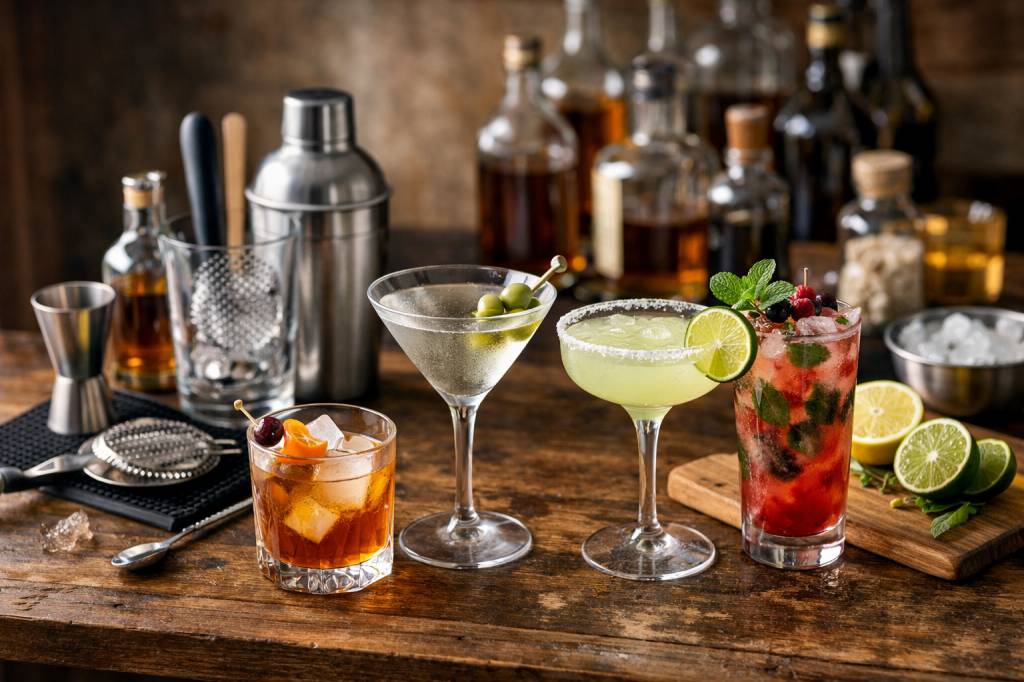
Before you start throwing lavender foam and charcoal bitters into a shaker, there’s one uncomfortable truth every home bartender has to accept: creativity only works once you’ve nailed the basics.
I learned this the hard way. Years ago, I tried to impress some friends with a “signature cocktail” involving gin, blueberries, basil, and way too much lemon juice. It looked pretty. It tasted like sour, herbaceous chaos. Nobody asked for a second round.
The problem wasn’t the idea. The problem was that I had no idea how to balance a drink, how strong it should be, or even when to shake or stir. Once I fixed those basics, my “experiments” stopped going straight to the sink.
If you’re serious about mixing better drinks at home, here are the core mixology fundamentals you should master before you start improvising.
Why mastering basics makes you more creative
A well-made cocktail isn’t magic; it’s structure. When you understand that structure, you can swap ingredients, play with flavors, and still end up with something drinkable.
Think of it this way:
- You don’t need a new recipe every time. You need a few base formulas.
- You don’t need a bar full of bottles. You need to know how to use the ones you have.
- You don’t need “fancy tricks.” You need clean technique and consistency.
Once those are solid, the fun stuff becomes much easier—and your hit rate goes way up.
The essential tools you actually need
You don’t have to buy out a bar supply store. But a few basic tools will make your life so much easier and your drinks much more consistent.
Here’s what I recommend starting with:
- Jigger – This is non‑negotiable. Eye-balling 2 oz vs 1.5 oz looks easy until your drink is either weak or a face-punch. Get a double-ended jigger with 1 oz / 2 oz measures plus lines for 0.5 and 0.75 oz.
- Shaker – A simple Boston shaker (tin + tin) or cobbler shaker (with built-in strainer) works. Boston gives you more control; cobbler is easier for beginners.
- Strainer – A Hawthorne strainer that fits over your shaker or mixing glass. If you only buy one, buy this.
- Mixing glass – For stirred drinks like Martinis and Old Fashioneds. A sturdy pint glass can work in a pinch.
- Bar spoon – Long handle, light weight. This matters for smooth, efficient stirring.
- Citrus juicer – Fresh juice is non‑negotiable. A handheld press is perfect.
- Peeler or channel knife – For citrus peels and garnishes. A basic vegetable peeler is fine.
- Ice molds or trays – Big cubes for spirit‑forward drinks, regular cubes for shaking and highballs.
Can you mix cocktails without these? Sure. Will it be harder to be consistent, repeat a great drink, and refine your skills? Definitely.
How to measure like a pro
If there’s one habit that will instantly upgrade your home bar, it’s this: start measuring everything.
When you measure:
- You can repeat a drink you liked.
- You can adjust a recipe with intention (e.g. “0.25 oz less lemon” instead of “I don’t know what went wrong”).
- You start understanding how small changes affect balance.
Basic measurement tips:
- Always fill the jigger to the top of the marked line; don’t “almost” fill it.
- Measure strong ingredients (spirits, citrus, sugar) precisely; you can be a bit looser with sodas and top‑ups.
- When trying a new recipe, make it exactly as written once before tweaking.
Once you’re in the habit of measuring, your “feel” for balance will get better, and you’ll eventually be able to free‑pour. But learn the rules before you break them.
The backbone of every cocktail: balance
Almost every classic cocktail is built on a simple tension:
- Strong – The alcohol (vodka, gin, rum, tequila, whiskey, etc.).
- Sour/Bitter – Usually citrus (lemon/lime) or bitter liqueurs/amari.
- Sweet – Sugar, simple syrup, liqueurs, or sweet modifiers.
When a drink tastes “off,” it’s almost always because one of those three is out of line:
- Too sour? Add a touch more sweet.
- Too sweet? Add more sour or dilute with more ice/stirring.
- Too strong or “boozy”? Stir or shake longer (more dilution), or reduce the spirit slightly.
A simple testing trick I use at home: if I’m unsure, I dip a bar spoon into the drink, taste, and ask myself one direct question: “If I could only change one thing, what would it be—more sweet, more sour, or less punchy?” Adjust one variable at a time.
Core cocktail templates you should know by heart
Instead of memorizing 50 recipes, learn a handful of formulas. Once you know these, you can swap spirits, citrus, and sweeteners to create endless variations.
The Sour (e.g., Whiskey Sour, Daiquiri)
- Basic ratio: 2 oz spirit + 0.75–1 oz citrus + 0.75–1 oz simple syrup
- Technique: Shake with ice, strain into a coupe or rocks glass.
Examples:
- Daiquiri – White rum + lime + simple syrup
- Whiskey Sour – Whiskey + lemon + simple syrup (optional egg white)
The Old Fashioned family
- Basic ratio: 2 oz spirit + 0.25–0.5 oz sugar/syrup + 2–3 dashes bitters
- Technique: Build in glass or stir with ice, strain over a big cube.
Examples:
- Classic Old Fashioned – Bourbon or rye + demerara syrup + Angostura bitters
- Rum Old Fashioned – Aged rum + demerara syrup + tiki or aromatic bitters
The Highball (e.g., Gin & Tonic, Whiskey Highball)
- Basic ratio: 1.5–2 oz spirit + 3–4 oz carbonated mixer
- Technique: Build over ice in a tall glass, gentle stir.
Examples:
- Gin & Tonic – Gin + tonic water + lime wedge
- Whiskey Highball – Whiskey + soda water + lemon peel
The Spritz
- Basic ratio: 2 oz bitter or aperitif + 3 oz sparkling wine + 1–2 oz soda
- Technique: Build over ice in a wine glass.
These templates are your playground. Want a new cocktail? Pick a template, plug in different ingredients, and keep the structure.
Shaking vs stirring (and why it matters)
The easiest way to spot a beginner bartender is someone shaking a Martini or stirring a Margarita. The reaction is the same as watching someone microwave a steak.
Basic rule:
- Shake cocktails with citrus, juice, egg white, cream, or thick syrups.
- Stir cocktails that are entirely spirit‑based (no juice), like Martinis and Manhattans.
How to shake properly
- Fill the shaker with plenty of ice (don’t be shy).
- Seal it firmly, hold with both hands (one on each part).
- Shake hard for about 10–15 seconds; you’re chilling, diluting, and aerating.
- Strain into the appropriate glass.
How to stir properly
- Fill your mixing glass with ice.
- Add ingredients, then insert your bar spoon along the inside wall.
- Stir smoothly for 20–30 seconds; the motion should be silent, not clunky.
- Taste with a spoon if you’re unsure; when it’s cold and balanced, strain.
One of my early “Martinis” was shaken into a foamy, cloudy mess because I thought aggressive shaking was always better. It wasn’t. The drink was over‑diluted and harsh. Once I learned to stir, my Martinis went from “this burns” to “oh, I get it now.”
Ice: the most underrated ingredient in your bar
If you’re using sad, half‑melted ice from the freezer that tastes like last week’s leftovers, your drinks are suffering.
Ice controls two things:
- Temperature – How cold your drink gets.
- Dilution – How much water melts into your cocktail.
Simple rules:
- Use fresh, hard ice cubes, not hollow or half‑melted ones.
- Use big cubes for spirit‑forward drinks served on the rocks (Old Fashioned, Negroni).
- Use standard cubes for shaking; you want enough surface area to chill and dilute quickly.
- Fill your shaker and mixing glass with ice; a half‑empty shaker means inconsistent dilution.
Good ice won’t save a bad recipe, but bad ice can ruin a good one—especially if it carries freezer odors.
Simple syrup & other easy prep that changes everything
Before you dive into infused syrups and homemade liqueurs, start with the workhorse: simple syrup.
Basic simple syrup
- 1 part sugar
- 1 part hot water
Stir until dissolved, let cool, and keep in the fridge (about 2–3 weeks in a clean bottle).
Once you’re comfortable with that, you can play with:
- Richer syrup (2:1 sugar to water) for Old Fashioneds and spirit‑forward drinks.
- Flavored syrups (add herbs, spices, citrus peels during cooling, then strain).
Two other easy prep items worth mastering early:
- Fresh citrus juice – Squeeze just before making drinks. Lemon and lime start losing brightness quickly.
- Simple salt solution – A few drops of 20% saline (20 g salt in 80 g water) can quietly sharpen flavors in some cocktails, but this is optional until you’ve nailed the basics.
Building a small but mighty home bar
You don’t need 20 bottles. Start with a focused selection that covers multiple templates.
Core spirits
- One good gin (London dry is a safe bet)
- One decent vodka
- One white rum (for Daiquiris and tropical drinks)
- One aged rum or whiskey (for Old Fashioned‑style drinks)
- One tequila blanco (100% agave)
Key modifiers & mixers
- Dry vermouth
- Sweet vermouth
- Orange liqueur (Cointreau, triple sec, etc.)
- Campari or another bitter aperitif
- Bitters (start with Angostura)
- Soda water, tonic water, and one or two fruit juices you actually use
With just that list, you can already make a ton of classics and learn all the core techniques before you go hunting for the obscure stuff.
Tasting and adjusting: how to “fix” a drink
Even with a good recipe, sometimes a drink hits your palate wrong. That’s normal. Palates differ, citrus can vary in acidity, syrups can be slightly stronger or weaker.
Here’s how to troubleshoot quickly:
- Too tart / sharp: Add 0.25 oz more syrup and shake again briefly.
- Too sweet: Add 0.25 oz citrus or a small splash of soda, then shake or stir again.
- Too strong / hot: Stir or shake with fresh ice a bit longer to dilute, or top with soda if appropriate.
- Too flat / boring: Sometimes a pinch of salt or an extra dash of bitters wakes it up.
Always make changes in small increments. A quarter ounce can completely change a cocktail.
When you’re ready to get creative (without wrecking your drink)
Once you’ve practiced the basics—measuring, balancing, shaking, stirring, and tasting—you can start bending the rules without breaking the drink.
A safe way to experiment:
- Pick a template you know (like a Sour).
- Swap one element at a time: the spirit, the citrus, or the sweetener.
- Keep the ratio the same at first, then adjust to taste.
Examples:
- Take a Daiquiri structure (rum + lime + syrup) and swap rum for tequila → you’re close to a stripped‑down Margarita.
- Start with an Old Fashioned and replace sugar syrup with honey syrup → softer, rounder profile.
- Use a classic Sour ratio with grapefruit instead of lemon and adjust the sugar up slightly to compensate for the extra bitterness.
This is where mixology gets exciting. You’re not just copying recipes—you’re designing your own, based on solid fundamentals.
Common beginner mistakes to avoid
If you can dodge these, you’ll be ahead of most home bartenders:
- Using bottled citrus juice – It will flatten your drink instantly. Fresh juice only.
- Under‑diluting or over‑diluting – Learn proper shaking/stirring times and always use plenty of ice.
- Ignoring measurements – “Just a splash” quickly becomes “why is this so strong?”
- Using cheap, flavored mixers to compensate – Master simple combinations before reaching for sugary flavored sodas.
- Too many ingredients – If your cocktail has eight components and tastes bad, you have no idea which one is the problem.
- Skipping the taste test – Always taste before you serve. A tiny adjustment can save the drink.
The goal isn’t perfection. The goal is to understand what happened every time you mix a drink—whether it’s great or terrible—so the next one is better.
If you focus on these fundamentals, your home bar stops being a guessing game and starts feeling like a playground. Once you can consistently shake a balanced Sour, stir a clear, cold Martini, and fix a drink that’s slightly off, then you’ve earned your fancy garnishes and wild ideas.
And unlike my early blueberry‑basil disaster, your “creative” cocktails might actually get requested again.