
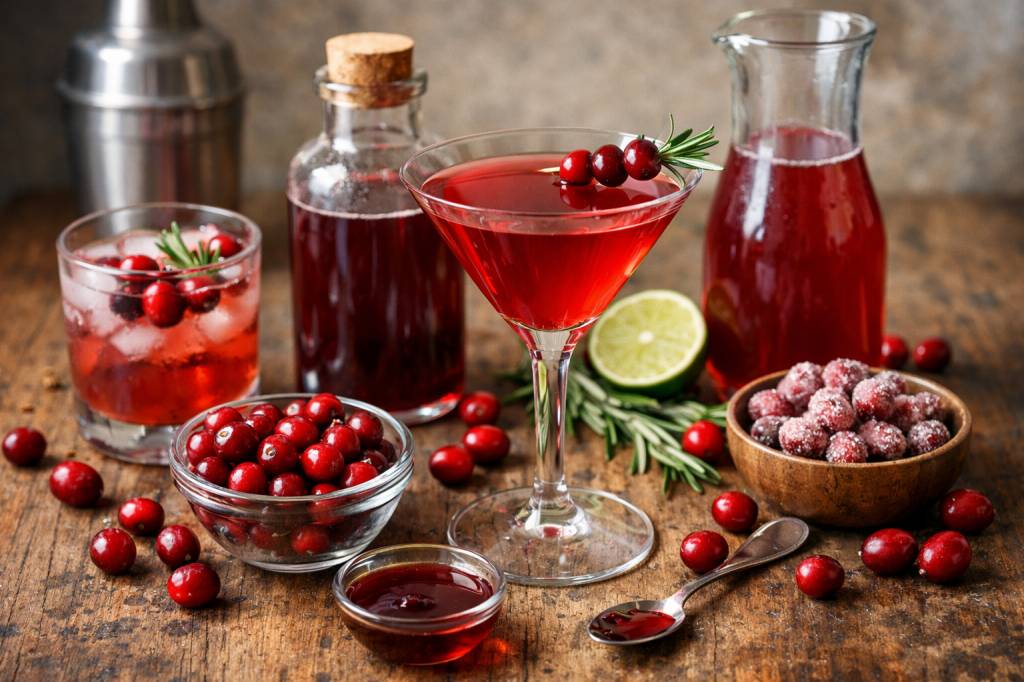
If your only relationship with cranberry in cocktails is the Cosmopolitan or a vodka-cranberry at a college bar… we need to talk.
Cranberry is one of the most useful tools you can have behind the bar: it’s bright, tart, endlessly mixable, and it behaves differently depending on how you use it — juice, shrub, or garnish. Once you understand what cranberry actually does in a drink, you can plug it into all kinds of recipes without everything tasting like a Cosmo remix.
Why cranberry is a bartender’s secret weapon
Cranberry brings three key things to a cocktail:
- Acidity – not as sharp as lemon or lime, but more structured and “drying”.
- Color – that ruby pink-red that makes any drink look instantly more special.
- Aromatic bitterness – especially from whole berries or shrubs; this keeps drinks from going flat or cloying.
Think of cranberry as a shape-shifter:
- In juice form, it plays the role of soft acid and color booster.
- In shrub form, it becomes a complex sour component you can use almost like citrus.
- As a garnish, it’s all about texture, aroma, and visual punch.
Once you stop thinking “Cranberry = Cosmo,” you start seeing it as what it really is: a flexible tool to balance sweetness, add brightness, and make even a simple highball look intentional.
Using cranberry juice: beyond vodka-soda-with-a-splash
I’ll start with a quick confession: for years, I avoided cranberry juice in cocktails because I associated it with cheap, sugary “cranberry cocktail” from a plastic jug. That stuff will absolutely drown your drink if you’re not careful.
The fix isn’t complicated, but it is important.
Choosing the right cranberry juice
All “cranberry juice” is not created equal. Look for:
- 100% cranberry juice – very tart, no added sugar, usually labeled “unsweetened”. Great for cocktails, but you’ll need to balance it.
- Blends with clear labeling – “cranberry juice cocktail” is usually sweetened and cut with other juices. Use sparingly or reduce other sweeteners.
- Low-sugar or no-sugar-added options – a good compromise if you like to keep recipes simple.
If you’re not sure, taste before you pour. Ask yourself: how sweet is this? Could I sip it alone? If yes, you’ll probably need very little (or no) additional sugar in the cocktail.
How much cranberry juice to use
In most shaken cocktails, a good starting point is:
- 0.5 to 1 oz (15–30 ml) of unsweetened cranberry juice for color and brightness.
- 1 to 1.5 oz (30–45 ml) if the juice is already sweetened and acting as your main mixer.
This keeps cranberry supporting the drink, not dominating it.
Spirits that love cranberry
Cranberry is more versatile than it looks. It pairs particularly well with:
- Vodka – clean, lets cranberry shine. Great for highballs and lighter sours.
- Gin – botanicals plus cranberry’s tartness = a more grown-up flavor profile.
- Rum – especially white or lightly aged; cranberry lifts tropical flavors without extra sweetness.
- Tequila blanco – sharp, fresh agave with cranberry is surprisingly refreshing.
- Aged spirits (bourbon, rye, brandy) – use less juice, more as a color and acid accent.
The rule of thumb: if a spirit plays well with citrus, it probably plays well with cranberry — just in different proportions.
Three cranberry juice cocktails that aren’t Cosmos
Here are three simple recipes that use cranberry juice in different ways, none of which will remind you of a Cosmo.
1. Cranberry Gin Sour (bright, pink, not too sweet)
- 2 oz (60 ml) gin
- 0.75 oz (22 ml) fresh lemon juice
- 0.5 oz (15 ml) simple syrup (1:1)
- 0.5 oz (15 ml) unsweetened cranberry juice
- Optional: 1 egg white or aquafaba for foam
Add all ingredients to a shaker (dry shake first if using egg white), then shake with ice and strain into a coupe. Garnish with a few cranberries on a pick. The cranberry here is doing two jobs: color and a subtle dry snap on the finish.
2. Autumn Cranberry Highball (a sessionable tall drink)
- 1.5 oz (45 ml) white rum
- 0.75 oz (22 ml) unsweetened cranberry juice
- 0.5 oz (15 ml) lime juice
- 0.25–0.5 oz (7–15 ml) simple syrup, to taste
- Top with soda water
Build in a tall glass with ice, top with soda, and give a gentle stir. Garnish with a lime wheel and floating cranberries if you want to show off a little.
3. Whiskey Cranberry Old Fashioned (subtle and spirit-forward)
- 2 oz (60 ml) bourbon or rye
- 0.25 oz (7 ml) unsweetened cranberry juice
- 0.25 oz (7 ml) rich simple syrup (2:1)
- 2 dashes Angostura bitters
Stir with ice, strain over a large ice cube. Express an orange twist over the top and garnish with a cranberry or two. The cranberry doesn’t turn this into a “fruity” drink; it just sharpens the edges and deepens the color.
Cranberry shrub: your zero-fuss complexity booster
If you’re not using shrubs yet, cranberry is a perfect way to start. A shrub is just a drinking vinegar — fruit, sugar, and vinegar — that gives you acidity and flavor in one move. It’s brilliant in cocktails and in non-alcoholic drinks.
Why I love cranberry shrubs for home bartending:
- They last weeks in the fridge.
- You don’t need fresh citrus on hand for every drink.
- They work in cocktails, spritzes, and sodas.
Simple cranberry shrub recipe
This is a base you can tweak to your taste.
- 1 cup (100 g) fresh or frozen cranberries
- 1 cup (200 g) sugar
- 1 cup (240 ml) apple cider vinegar (or half cider, half white wine vinegar for a softer profile)
Method (no-cook, more aroma):
- Lightly crush the cranberries in a bowl or jar.
- Cover with sugar, stir, and let sit in the fridge 24–48 hours, stirring once or twice, until you have a bright red syrup and the berries look spent.
- Strain off the syrup, pressing gently on the solids.
- Mix syrup with vinegar in a clean bottle or jar and shake well.
- Let rest at least 24 hours before using; flavor improves over a few days.
Taste it. Too sharp? Add a bit more sugar. Too sweet? Add a splash more vinegar. You want something balanced enough to sip with sparkling water.
How to use cranberry shrub in cocktails
As a general rule, you can treat shrub as part sour, part sweet. A starting point for sour-style cocktails:
- 2 oz (60 ml) spirit
- 0.5–0.75 oz (15–22 ml) cranberry shrub
- 0.25–0.5 oz (7–15 ml) fresh citrus (optional, but nice)
Three ideas to get you going:
Cranberry Shrub Spritz (low effort, very crowd-friendly)
- 1.5 oz (45 ml) cranberry shrub
- 3 oz (90 ml) dry sparkling wine or Prosecco
- Top with soda water
Build over ice in a wine glass, stir once, garnish with cranberries. If you want this non-alcoholic, skip the wine and use more soda or a non-alcoholic sparkling wine.
Cranberry Shrub Margarita
- 2 oz (60 ml) tequila blanco
- 0.5 oz (15 ml) cranberry shrub
- 0.5 oz (15 ml) lime juice
- Optional: 0.25 oz (7 ml) Cointreau or triple sec
Shake with ice and strain into a rocks glass over fresh ice. Salt rim is optional, but the salty contrast with cranberry’s tartness is fantastic.
No-Spirit Cranberry Shrub Cooler
- 1.5 oz (45 ml) cranberry shrub
- 0.5 oz (15 ml) orange juice
- Top with sparkling water or tonic
Build over ice in a tall glass and stir. This is a solid option when you want something that feels like a “real drink” without alcohol.
Cranberry as garnish: tiny details, big payoff
The garnish is where cranberry stops being functional and becomes fun. And yes, it still affects flavor — even when it looks purely decorative.
Fresh and frozen cranberries
Fresh cranberries are firm, tart, and almost too sour to snack on raw, but they’re great in drinks.
- On a cocktail pick – thread 3–4 cranberries onto a pick and balance it across the rim of a coupe, old fashioned, or flute.
- Floating in the glass – drop a few into a highball or spritz. If you’re using frozen berries, they’ll help keep the drink cold.
One thing to know: fresh cranberries float and can sometimes clump in the middle of a glass. It’s charming, but if you’re shooting photos, use a wide glass and don’t overcrowd.
Sugared cranberries (the five-minute party trick)
These look like they took ages. They didn’t.
- 1 cup (100 g) fresh cranberries
- 0.5 cup (100 g) sugar
- 0.5 cup (120 ml) water
- Extra sugar for rolling
Method:
- Heat water and sugar just until the sugar dissolves. Let cool slightly.
- Toss cranberries in the syrup to coat, then remove them with a slotted spoon.
- Roll in granulated sugar until coated and let dry on a tray for at least 30–60 minutes.
Use them on picks, float a couple on foam-topped drinks, or simply scatter a small bowl of them on the bar for guests to grab. They bring a little sweet crunch and a lot of holiday energy.
Cranberry ice cubes and “ice rings”
If you’re batching drinks or serving punch, this is worth the tiny bit of prep.
- Cranberry ice cubes – Add a few cranberries to each ice cube tray compartment, then top with water. Freeze. They look great in clear drinks like gin & soda or vodka tonics with a splash of cranberry.
- Ice ring for punch – Use a bundt pan or large mold, add cranberries, orange slices, maybe some rosemary sprigs, and fill with water. Freeze solid, then unmold into your punch bowl. It chills and decorates at the same time.
Tip: use boiled (then cooled) water or filtered water if you want clearer ice.
Pairing cranberry with food
Cranberry drinks aren’t just for the cocktail hour. They’re surprisingly good at the table, especially with rich or salty foods.
- With cheese boards – a cranberry shrub spritz cuts through creamy cheeses and works with nuts and dried fruit.
- With roasted meats – a whisky or brandy drink with a hint of cranberry stands up to roast chicken, pork, or turkey.
- With fried snacks – cranberry highballs and spritzes are ideal with salty, fried appetizers; the acid resets your palate.
When in doubt, ask yourself: would cranberry sauce taste weird with this? If the answer is no, a cranberry drink will probably be happy next to it.
Batching cranberry drinks for a crowd
Cranberry is perfect for big-batch cocktails because:
- It’s stable (no browning like lemon juice).
- It scales easily.
- Most guests already like the flavor.
Here’s a template you can adapt to your taste and your crowd size.
Cranberry Crowd Pitcher (about 8 servings)
- 2 cups (480 ml) spirit (vodka, white rum, or tequila work best here)
- 1 cup (240 ml) cranberry juice (adjust sweetness based on juice)
- 0.5 cup (120 ml) lime or lemon juice
- 0.5–0.75 cup (120–180 ml) simple syrup, to taste
- 2 cups (480 ml) cold soda water or sparkling water, added just before serving
Stir everything except the soda in a large pitcher and chill well. When ready to serve, add soda water, stir gently, and pour over ice. Garnish each glass with cranberries and citrus wheels.
If you’re using a shrub instead of juice, cut back on the citrus and sugar. Shrub is doing both jobs.
Troubleshooting: when cranberry drinks go wrong
If you’ve ever made a cranberry drink that tasted flat, harsh, or like liquid candy, one of these was probably the culprit.
- Problem: Drink tastes dull or “muddy”.
Likely cause: Too much sweetened cranberry juice, not enough acidity.
Fix: Add a dash of fresh lemon or lime, or cut the amount of juice and replace some with soda water. - Problem: Drink is too sharp and thin.
Likely cause: Unsweetened cranberry with no balancing sugar.
Fix: Add a small amount of simple syrup or liqueur. Even 0.25 oz can round things out. - Problem: Everything tastes like the same cranberry drink.
Likely cause: Using cranberry only as a big, sweet mixer.
Fix: Use smaller amounts for color and edge, and layer other flavors: herbs (rosemary, thyme), other juices (orange, grapefruit), bitters, or different spirits.
How to start experimenting (without wasting a bottle of juice)
If you’re not sure where to begin, here’s a simple approach I use when I’m testing a new ingredient like a different brand of cranberry juice or a new shrub batch:
- Make a mini sour in a shot glass: 0.5 oz spirit, 0.25 oz cranberry (juice or shrub), a squeeze of citrus, a few drops of simple. Stir with ice and taste.
- Keep salt nearby. A tiny pinch in a cranberry drink can soften rough edges and make flavors pop — just like in cooking.
- Change only one thing at a time: juice type, amount of sweetener, or acid, not all three. It’s easier to learn what’s actually working.
Once you’ve played with cranberry in juice, shrub, and garnish form, you stop seeing it as “just a holiday thing” and start using it year-round: bright spritzes in summer, cozy whiskey drinks in winter, and sparkling zero-proof coolers whenever you want something interesting without alcohol.
Next time you’re tempted to grab the bottle of cranberry juice only for a Cosmo, pause for a second and ask: is this better as a small accent, a shrub, or a garnish today? That one question will open up more cranberry possibilities than any recipe list ever could.