
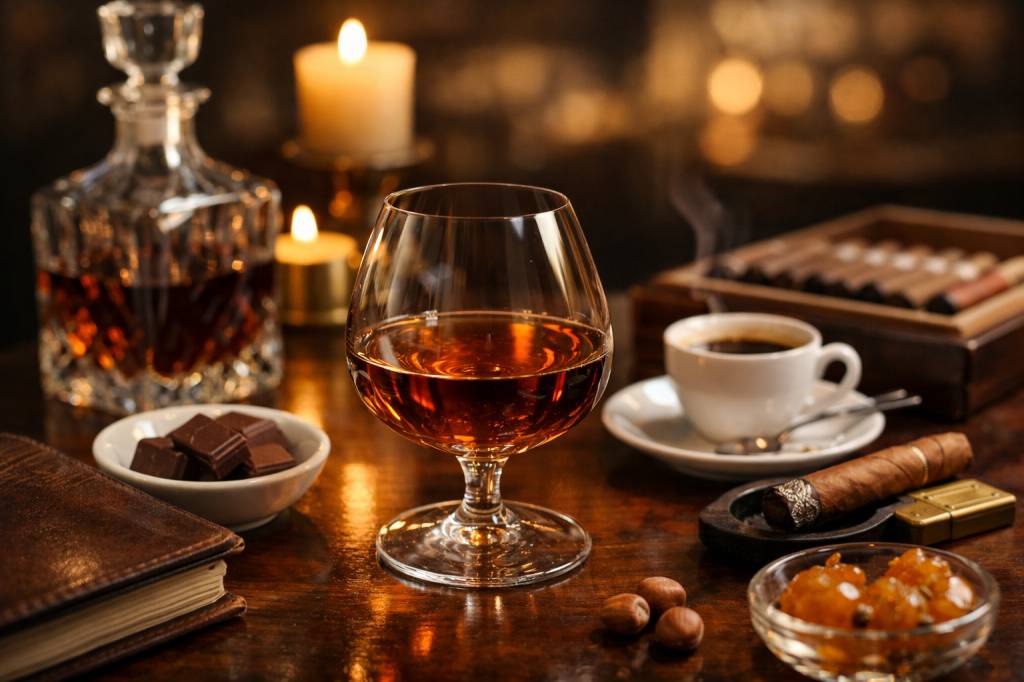
There’s something incredibly satisfying about ending a meal with a glass of cognac. It’s that quiet moment où tout se pose: la table est encore un peu en désordre, les assiettes traînent, les conversations ralentissent… et quelqu’un demande: “Un digestif, ça tente quelqu’un ?”
Si tu as envie de transformer ce simple “dernier verre” en vrai rituel digestif — élégant mais sans chichis — le cognac est ton meilleur allié. Et l’idée n’est pas de sortir un coffret hors de prix juste pour impressionner : avec quelques bases solides, tu peux vraiment sublimer ce moment, que ce soit à deux après un dîner simple ou à huit autour d’un repas de fête.
Why cognac works so well as a digestif
Cognac is basically the unhurried guest of the spirits world. Double distillation, long ageing in oak, strict regulations: everything about it pousse à la lenteur. Et c’est exactement ce qu’on recherche après un bon repas.
As a digestif, cognac has a few real advantages:
Important side note: despite the name “digestif”, cognac won’t magically erase a raclette party or six courses of cassoulet. What it does extremely well, en revanche, c’est de prolonger le plaisir du repas sans le rendre lourd.
Choosing the right cognac style for after dinner
You don’t need a full cognac collection to host a proper digestif moment. Mais choisir la bonne catégorie aide beaucoup. Voici comment je les utilise chez moi, quand je reçois :
If you’re building a small digestif-friendly home bar, I’d start like this:
Tu n’as pas besoin d’une marque luxe pour que ce soit bon. Beaucoup de maisons intermédiaires font de très beaux VSOP/XO, souvent plus intéressants que les références ultra-marketing. Si l’étiquette parle de notes de “prune, figue, cacao, noix” : c’est typiquement ce qui marche bien après le dîner.
The classic French-style cognac digestif ritual
Let’s start with the simplest version — the one you can mettre en place dès ton prochain dîner, sans acheter la moitié du rayon verrerie.
Here’s how I build a “cognac moment” after a meal when I host:
I’ll remove most plates and serving dishes, but I leave a few things: a carafe of water, small glasses, maybe a bit of bread or nuts if people are still nibbling.
Nothing dramatic, just enough to change the mood from “meal” to “après-repas”. A small candle or two on the table instantly warms the scene (and yes, cognac in candlelight looks gorgeous in the glass).
I’ll place the bottle in the center, with glasses already set for everyone who’s interested. I usually ask: “Plutôt petit verre pour goûter, ou un peu plus pour prendre le temps ?” That gives guests control and avoids overpouring.
Pour 2–3 cl (about 2/3 to 1 oz). It looks a bit lost in a big glass, but it’s the right quantity to enjoy without feeling knocked out. People can always ask for more.
I’ll encourage guests to nose the cognac before tasting — not with a speech, just a casual “Smell this, you’re getting more dried fruit or spice?” This turns it into a shared experience, not just “another drink”.
If you have a living room, you can also move everyone from the dining table to the canapé avec leur verre. That simple move physically marks the start of the digestif moment. But honestly, even around the same table, the atmosphere changes as soon as the plates leave and the cognac arrives.
The best glassware and serving temperature
On voit souvent le cognac dans des énormes verres ballon. Franchement? Pas nécessaire, et souvent pas idéal.
For after-dinner sipping, here’s what works best at home:
They concentrate aromas but don’t trap them. Most bars and homes already have something that works: a small, slightly tulip-shaped wine glass is perfect.
If you don’t have tulip glasses, a simple tumbler works very well. The ritual matters more than the exact glass profile.
They can amplify alcohol burn because your nose is stuck in a cloud of ethanol. Smaller is usually better.
As for temperature:
Bottom line: aim for comfortably cool room temperature, and let the cognac open up naturally as you sip.
Neat, with water or on ice? Finding your style
Now we get into the part that crée toujours un peu de débat : comment “faut-il” boire le cognac ?
Short answer: there is no “faut”. There is only what you enjoy, and what suits the moment.
Here are three options I routinely offer guests after dinner:
Perfect for a good VSOP or XO when you really want to taste the layers. I’ll usually suggest neat first, especially for small pours. It’s the best way to understand the cognac.
Yes, like whisky. A few drops of room-temperature water can:
I’ll sometimes serve a tiny glass of water on the side and let the guest add a bit to their cognac if they feel like it.
This shocks the purists, but it’s a great option for guests who “don’t usually drink brown spirits”. One large cube in a rocks glass with 3–4 cl of cognac makes it colder, smoother, slightly diluted — très facile à boire.
My rule when I host: I propose neat by default, and I immediately add “If you prefer with ice or a splash of water, say so — no rules here.” This relaxes everyone and avoids the vibe “You must drink this in the One Correct Way”.
Pairing cognac with dessert, coffee and small bites
One of the easiest ways to create a real digestif ritual is to align dessert, coffee and cognac au lieu de les servir en vrac.
Here are pairings that work every single time :
Think: fondant au chocolat, brownies, chocolate mousse, dark chocolate tart.
Tarte aux poires, apple crumble, baked apricots, fruit clafoutis.
If your guests aren’t dessert people, a small plate of cheese can be your bridge to cognac.
Option 1: Serve espresso, then offer a small glass of cognac separately. Classic, safe, appreciated.
I personally avoid mixing the cognac directly into the coffee if it’s a good bottle. If someone really wants that, I’ll usually use a younger VS or a more basic brand for coffee drinks and keep the nicer stuff for sipping.
Light cognac cocktails that still feel like a digestif
Tout le monde n’a pas envie d’un spiritueux pur en fin de repas, et c’est normal. Mais ça ne veut pas dire qu’il faut forcément redescendre à un simple jus de fruits.
Here are a couple of cognac-based options that stay in the digestif territory, without being too heavy or sweet.
Cognac on crushed ice with orange twist
This is my go-to for guests who say “I’d like to try cognac but I’m not sure I like strong drinks.”
In a rocks glass, add crushed ice, pour the cognac, express the orange peel over the top (squeeze skin side down), drop it in. Stir gently once or twice. That’s it.
It’s cold, fragrant, and the orange sends it closer to dessert territory without turning it into a sugar bomb.
Very simple Cognac Old Fashioned (digestif style)
When the meal was savoury and not too heavy on dessert, a very light Old Fashioned riff can close the evening nicely.
In a rocks glass filled with ice (ideally one big cube), add syrup and bitters, then the cognac. Stir briefly, garnish with the orange peel. Serve immediately.
Key point: keep the sugar low. After a full meal, “slightly sweet and aromatic” is perfect; “dessert in a glass” is too much.
Hosting tips: making the digestif feel special, not stiff
Le risque avec le cognac après le dîner, c’est de tomber dans le cérémonial un peu coincé. Pourtant, il suffit de quelques détails pour garder le moment chaleureux et simple.
Here’s what works consistently when I host:
After a big meal, some guests just want water or tea. Always propose the cognac as an option, never as a must. A relaxed “If anyone feels like a little cognac, I’ve got a nice bottle open” is enough.
You can always top up. A 2 cl pour looks elegant and feels respectful of everyone’s limits.
Still water, small glasses. This alone prevents so many “ouf, c’était un peu trop” reactions the next day.
If someone asks about the cognac, share a detail or two — why you chose it, where you discovered it, what aromas you get from it. But no 30-minute monologue on AOC regulations, unless you’re all that kind of nerd.
I usually wait until dessert plates are almost empty or coffee is ready before suggesting a cognac. Coming too early, it fights with the meal; too late, and people are already mentally in Uber mode.
Building your own cognac digestif ritual at home
Au final, le “rituel digestif” ne tient pas à une forme unique. Il dépend de ta table, de ton style de cuisine, de tes amis. Mais si tu veux un point de départ concret, voici un scénario que tu peux tester tel quel lors de ton prochain dîner :
La fois suivante, tu peux varier : proposer un XO, tester le service avec un gros glaçon, ajouter une petite assiette de chocolat noir ou de fruits secs au centre de la table. En quelques dîners, tu auras ton propre “signature” digestif, celui que tes amis associeront à tes soirées.
Cognac doesn’t have to be formal, expensive or intimidating. Used right, it’s simply one of the most effective ways to prolong a good meal — slowly, chaleureusement, un petit verre à la fois.