
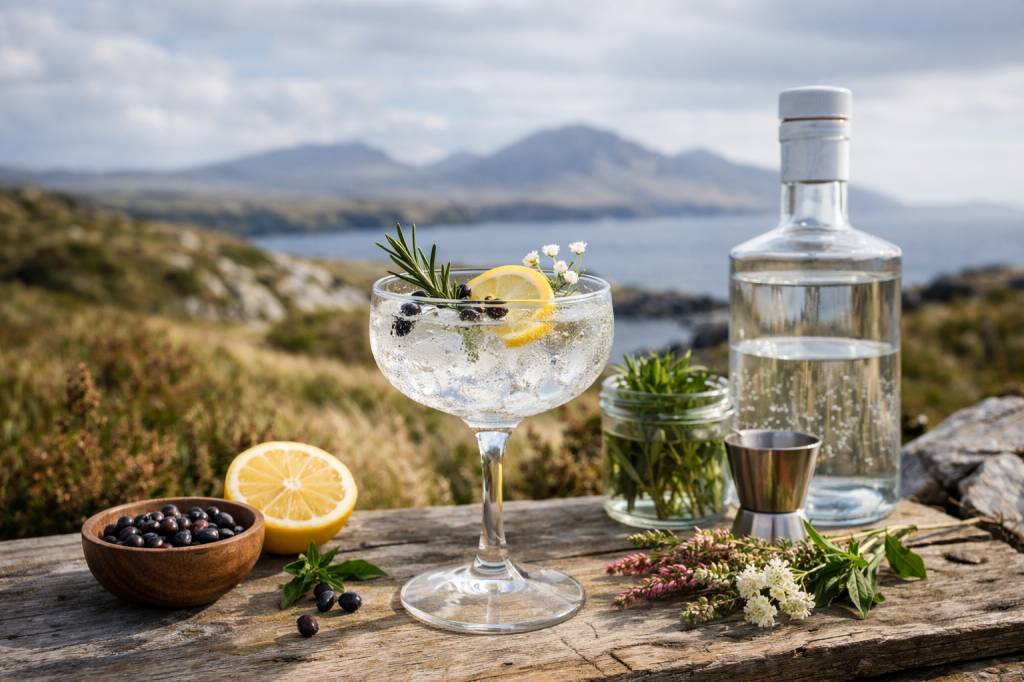
If you’ve ever poured a classic London Dry into your shaker and thought, “This is nice, but I want more story in my glass,” The Botanist is probably what you were looking for. This Islay gin isn’t just about juniper and citrus. It’s about an island: wind, salt spray, herbs growing out of rocks, and a bunch of slightly obsessed people who thought collecting 22 wild botanicals by hand was a reasonable idea.
In this article, we’re going to build cocktails that actually let those wild botanicals speak. Not drown them in sugar, not bury them under juice — showcase them. Think of these recipes as frameworks: light on fuss, heavy on flavor, easy to tweak depending on what you can find locally.
What makes The Botanist different?
The Botanist comes from Islay, an island better known for smoky Scotch than for gin. But this bottle is a love letter to the island’s plant life. On top of the usual “gin suspects” (juniper, coriander, citrus peel), the distillers add 22 foraged botanicals: heather, gorse, bog myrtle, thyme, wood sage, and a whole cast of wild herbs and flowers.
What does that actually taste like in your glass?
- Juniper-forward but soft: It’s clearly gin, but not shouty or pine-heavy.
- Fresh and green: Notes of thyme, mint, and leafy herbs without tasting like salad.
- Floral but not perfumey: Heather and flowers give lift, not grandma’s soap.
- Subtle coastal vibe: A hint of salinity and cool air, especially when you don’t mask it with heavy mixers.
The mistake I see most often with this gin? Treating it like any random bottle in a crowded G&T. Pour, drown in tonic, add a lemon wedge from the back of the fridge, and call it a day. You can do that. But it’s a bit like playing a vinyl record through a broken Bluetooth speaker. You’re getting sound, but not the point.
How to work with The Botanist in cocktails
When I first started mixing with The Botanist, I did what I always do with a new gin: I made a Martini, a G&T, and a Collins with the same base ratios I use for London Dry. Two drinks were great; one fell flat. That’s when the “ah-ha” clicked — this gin likes space and subtlety.
Here are a few simple rules to get the best out of it:
- Keep sugar in check: Too much syrup or liqueur bulldozes the herbal and floral notes.
- Think highball and stirred: Long, bubbly drinks and spirit-forward cocktails tend to highlight the complexity best.
- Garnish with intention: Fresh herbs, edible flowers, citrus peels, and gentle aromatics amplify the botanicals.
- Use clean ice: Cloudy, freezer-burnt ice will absolutely show in a delicate gin like this.
- Stay light on smoke: You can nod to Islay whisky, but too much peat will turn this into a Scotch drink with a confused gin cameo.
With that in mind, let’s get into the fun part: cocktails that let the island shine.
Wild Islay Gin & Tonic (done properly)
My first real “oh, wow” moment with The Botanist wasn’t in a fancy bar — it was in a tiny rental kitchen on a windy evening, with a mismatched glass and a bag of supermarket herbs. I swapped my usual lime wedge for a sprig of thyme and a grapefruit peel, and suddenly the gin tasted three times more interesting.
This G&T is all about lifting those botanicals instead of smothering them.
Ingredients:
- 50 ml (1.75 oz) The Botanist Gin
- 120–150 ml (4–5 oz) chilled, dry tonic water (Mediterranean or light-style)
- 1 long strip grapefruit peel (or lemon if that’s what you have)
- 1 small sprig fresh thyme (or rosemary, very small)
- Ice cubes (ideally large and clear)
Method:
- Fill a highball or large wine glass to the top with ice.
- Add The Botanist.
- Top gently with tonic; don’t dump it in from a great height, just a tilt and pour.
- Express the grapefruit peel over the glass (twist it to release the oils), then drop it in.
- Lightly clap the thyme between your hands to release aroma, then stand it in the glass.
- Give a very gentle stir.
Why it works: Grapefruit echoes the gin’s citrus and floral notes; thyme boosts the wild herb character. A dry tonic keeps sweetness in check so you actually taste the island.
Coastal Martini (for people who think they don’t like Martinis)
If you usually find Martinis “too harsh,” The Botanist might change your mind. Its softness and herbal complexity make it one of the most approachable Martini gins, especially when you frame it with a hint of salinity instead of slamming it with brine.
Ingredients:
- 60 ml (2 oz) The Botanist Gin
- 15 ml (0.5 oz) dry vermouth (Noilly Prat, Dolin, or similar)
- 1–2 drops 20% saline solution (optional but recommended)*
- Lemon peel for garnish
*To make saline solution: Dissolve 20 g fine sea salt in 80 g water. Store in a dropper bottle in the fridge. Use sparingly.
Method:
- Fill a mixing glass with ice.
- Add gin, vermouth, and saline (if using).
- Stir for 20–30 seconds until very cold.
- Strain into a chilled coupe or Nick & Nora glass.
- Express a lemon peel over the surface and either discard or drop in.
Why it works: The dry vermouth and just a kiss of saline lean into the coastal, herbal, slightly floral character of The Botanist. The result is clean, bright, and far less aggressive than a classic London Dry Martini.
Foraged Garden Collins
On paper, this is just a Collins: gin, citrus, sugar, bubbles. In practice, it’s a template for using whatever soft herbs and edible flowers you can actually find — whether that’s wild stuff from a hike or a bunch of slightly wilted mint from the back of your fridge.
The goal is a tall, refreshing drink that tastes like a walk through a garden on a cool day.
Ingredients:
- 50 ml (1.75 oz) The Botanist Gin
- 25 ml (0.75–1 oz) fresh lemon juice
- 10–15 ml (0.33–0.5 oz) simple syrup (1:1 sugar to water), to taste
- 60–90 ml (2–3 oz) soda water
- Small handful mixed soft herbs (choose 1–2, not all): mint, basil, lemon balm, tarragon
- Optional: edible flowers for garnish (viola, nasturtium, etc.)
- Ice cubes
Method:
- In a shaker, lightly bruise 3–4 small leaves of your chosen herb(s) with the simple syrup. Don’t shred them into a green mush; one or two gentle presses with a muddler or spoon are enough.
- Add gin, lemon juice, and ice. Shake briefly (5–8 seconds).
- Strain into an ice-filled tall glass.
- Top with soda water and give a gentle stir.
- Garnish with a fresh herb sprig and an edible flower if you have one.
Why it works: The Botanist already leans herbal and floral. By choosing one or two herbs that harmonize (mint + lemon balm, or basil + tarragon), you’re turning up the volume on what’s already in the bottle instead of trying to add a whole new flavor story.
Heather & Honey Sour (balanced, not sticky)
Honey and flowers can be a risky pairing. Done wrong, you end up with something that tastes like a soap-scented cough drop. Done right, you get a silky, elegant sour that feels like an Islay spring evening in a glass.
The key is restraint: light honey, bright citrus, and no heavy-handed floral syrups.
Ingredients:
- 50 ml (1.75 oz) The Botanist Gin
- 20 ml (0.75 oz) fresh lemon juice
- 15 ml (0.5 oz) honey syrup (1:1 honey to warm water)
- Optional: 15 ml (0.5 oz) egg white or aquafaba for foam
- 1 dash orange bitters (optional but recommended)
- Lemon peel or small edible flower for garnish
Method:
- If using egg white/aquafaba, do a dry shake first: add all ingredients to the shaker (no ice) and shake hard for 10 seconds.
- Add ice and shake again until cold.
- Strain into a chilled coupe.
- Garnish with a thin strip of lemon peel or a single edible flower.
Why it works: The Botanist’s floral side (heather, chamomile-like notes) pairs beautifully with a light honey. Lemon keeps it from getting cloying, and the texture from egg white or aquafaba makes it feel much fancier than the effort involved.
Smoke on the Shore Highball
This is where we nod to Islay’s smoky whisky heritage without completely hijacking the drink. Think of the Scotch as a seasoning, not a co-star. Too much peat and you’ll lose everything delicate about the gin.
Ingredients:
- 45 ml (1.5 oz) The Botanist Gin
- 10 ml (0.33 oz) light, dry vermouth
- 5 ml (1 teaspoon) Islay single malt (peaty but not the smokiest monster you own)
- 90–120 ml (3–4 oz) chilled soda water
- 1 thin lemon wheel or peel
- Ice cubes
Method:
- Fill a highball glass with ice.
- Add gin, vermouth, and the teaspoon of whisky.
- Top with soda water and stir gently.
- Garnish with a lemon wheel or peel.
Why it works: You get a whisper of smoke drifting over a bright, herbal, effervescent base. The Botanist still runs the show, but the Scotch reminds you where this gin was born.
Low-ABV Botanist Spritz
Not every cocktail night needs to end with someone ordering a questionable round of shots. When I’m hosting and want everyone to still like me in the morning, I lean hard on low-ABV spritzes. With The Botanist, you can build something light, herbal, and endlessly drinkable that still feels special.
Ingredients:
- 30 ml (1 oz) The Botanist Gin
- 60 ml (2 oz) dry or off-dry white wine (Albariño, Sauvignon Blanc, or a light Pinot Grigio)
- 60–90 ml (2–3 oz) soda water
- 1 strip orange or lemon peel
- Fresh herb sprig (rosemary, thyme, or mint)
- Ice cubes
Method:
- Fill a large wine glass with ice.
- Add gin and white wine.
- Top with soda water, then give a gentle stir.
- Garnish with citrus peel and herb sprig.
Why it works: It’s refreshing, not overly boozy, and the wine’s acidity plus the herbs play beautifully with the gin’s botanicals. It’s also ridiculously easy to batch for a crowd.
Host-friendly tips for serving The Botanist
You don’t need a full bar setup or a professional garnish station to make The Botanist shine at home. A few thoughtful choices go a long way.
- Pick one “hero” garnish per drink: Thyme, grapefruit, lemon, rosemary, or mint. Don’t turn the glass into a salad.
- Use chilled components: Cold tonic, cold soda, and a pre-chilled bottle of gin keep long drinks bright and crisp.
- Batch bases, not bubbles: For a party, pre-mix the spirit, citrus, and sweetener in a jug, then top each glass with tonic or soda to order so it stays fresh.
- Offer one long, one short option: For example, a Wild Islay G&T and a Coastal Martini. Two drinks, two moods, same bottle.
- Label your herbs: If you’re putting sprigs out for guests to garnish their own drinks, a few small labels (“thyme,” “mint,” “rosemary”) help avoid the “what is this twig?” hesitation.
Bringing Islay into your glass
The Botanist is one of those gins that rewards you for paying attention. If you throw it into a sugary, neon cocktail, you’ll get a decent drink — but you might as well have used any mid-shelf bottle. When you let it breathe, keep your mixers lean, and choose garnishes that echo the wild herbs and flowers inside, that’s when the island shows up.
Start with the Wild Islay G&T and the Coastal Martini to get a feel for what the gin wants to do. Then play: swap thyme for rosemary, lemon for grapefruit, soda for tonic, wine for vermouth. Think like the foragers who went out into the wind to collect those botanicals in the first place — curious, a little stubborn, and willing to explore.
If you experiment with your own Botanist creations, keep notes. What ratio worked? Which garnish suddenly made everything click? That’s how you go from “following a recipe” to actually understanding this spirit — and once you hit that point, every pour becomes a tiny trip back to Islay.