
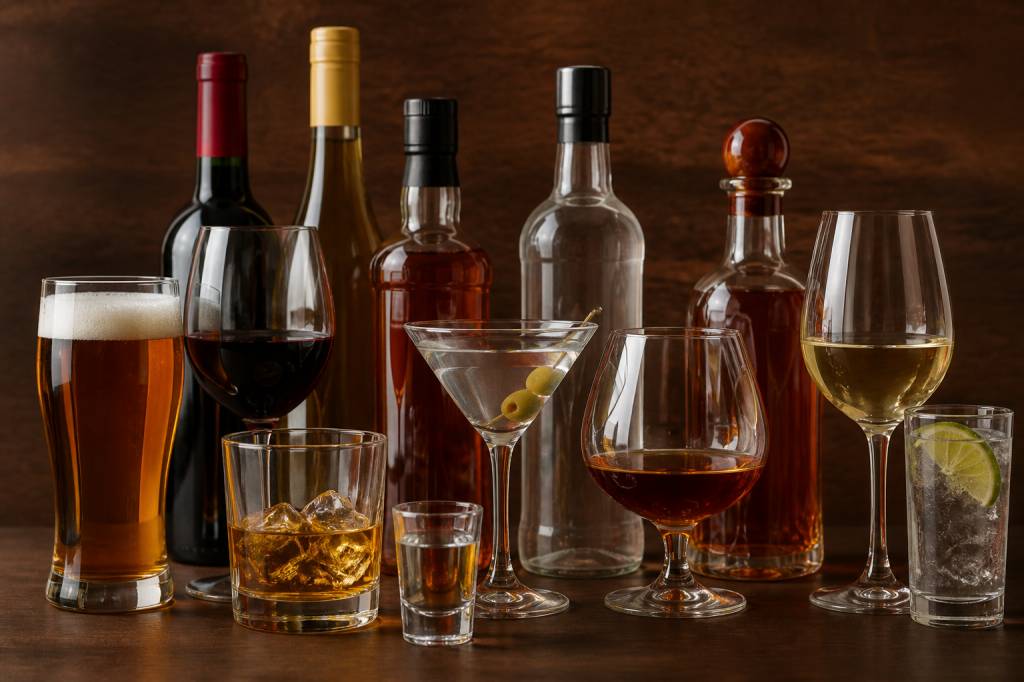
Walk into a well-stocked bar and the choices can feel endless: vodka, rum, whiskey, gin, tequila, wine, beer, and a colorful wall of liqueurs. What is the actual difference between them? Which bottles belong in a beginner’s home bar? And why does one spirit work beautifully in a Martini while another is better suited to a tropical punch?
I have stood in front of a liquor store shelf with a cocktail recipe in one hand and absolutely no idea what to buy with the other. The good news is that alcohol becomes much easier to understand once you know how each category is made, how it tastes, and how it behaves in a drink.
This guide covers the main kinds of alcohol: distilled spirits, liqueurs, wine, and beer. Use it as a practical starting point for mixing cocktails, pairing drinks with food, or simply making more confident choices behind the bar.
The Four Main Categories of Alcohol
Most alcoholic drinks fall into four broad groups: fermented beverages, distilled spirits, fortified wines, and liqueurs. The production method affects the flavor, alcohol content, texture, and best use for each drink.
- Beer: A fermented beverage made primarily from grains, hops, yeast, and water.
- Wine: A fermented beverage made from grapes or other fruits.
- Spirits: Distilled beverages such as vodka, gin, rum, whiskey, tequila, and brandy.
- Liqueurs: Sweetened, flavored spirits that may contain fruit, herbs, spices, flowers, nuts, coffee, or cream.
Alcohol by volume, or ABV, is another useful point of reference. Beer usually ranges from about 4% to 10% ABV, wine from 10% to 16%, liqueurs from 15% to 30%, and most spirits from 35% to 50%. These are general ranges, not strict rules. Some craft beers are stronger than wine, and some fortified wines can be surprisingly powerful.
Distilled Spirits: The Backbone of the Cocktail World
Distillation concentrates alcohol and flavor after fermentation. The result is a stronger beverage with a more defined character. When a cocktail recipe calls for a “base spirit,” it usually means one of the major distilled categories below.
Vodka
Vodka is known for its clean, neutral profile. It can be made from grains, potatoes, corn, grapes, or other agricultural products. Because it contributes relatively little flavor, vodka allows mixers, fruit, herbs, and syrups to take center stage.
That neutrality makes vodka extremely versatile. It is the foundation of a Moscow Mule, Cosmopolitan, Bloody Mary, Screwdriver, and Espresso Martini. It is also a useful choice when you want a cocktail to taste bright and fresh rather than strongly spirit-forward.
My practical advice: do not assume the most expensive vodka is automatically the best for mixing. Choose a smooth bottle from a reliable producer, then spend your attention on fresh citrus, quality ice, and balanced proportions. Those details often make a bigger difference in the finished drink.
Gin
Gin begins with a neutral spirit but is redistilled or infused with botanicals. Juniper must be the dominant flavor, but other ingredients may include coriander, citrus peel, angelica root, cardamom, cucumber, pepper, or floral botanicals.
London Dry gin is usually crisp, juniper-forward, and dry. New Western or contemporary gins may highlight citrus, flowers, or fresh herbs. Old Tom gin is slightly sweeter and works beautifully in classic cocktails such as the Tom Collins.
Gin is ideal for drinks where aroma matters. Try it in a Gin and Tonic, Negroni, Martini, French 75, or Bee’s Knees. If you are making a Martini, the gin matters enormously because there are so few ingredients to hide behind. Start with a classic London Dry style, then explore more modern bottles.
Rum
Rum is made from sugarcane juice, sugarcane syrup, or molasses. Its flavor depends on the raw material, fermentation, aging, and blending process.
- White rum: Light and clean, excellent for Daiquiris, Mojitos, and Piña Coladas.
- Gold or amber rum: More rounded, with gentle caramel and vanilla notes from aging.
- Dark rum: Richer and more intense, often used in tropical drinks and dessert-style cocktails.
- Aged rum: Complex and smooth enough to sip, with notes of oak, spice, dried fruit, or caramel.
- Overproof rum: Very high in alcohol and best used carefully for intensity or a dramatic float.
One of my earliest cocktail mistakes was using a heavy dark rum in a light Daiquiri. The drink tasted muddy instead of fresh. The lesson was simple: match the rum’s weight to the recipe. A crisp white rum usually gives citrus-based cocktails the lift they need.
Whiskey
Whiskey is made from fermented grains and aged in wooden barrels. The spelling varies by region: “whiskey” is common in the United States and Ireland, while “whisky” is generally used in Scotland, Canada, and Japan.
Bourbon is an American whiskey made primarily from corn. It often has notes of vanilla, caramel, oak, and baking spice. Use it in an Old Fashioned, Whiskey Sour, Mint Julep, or Boulevardier.
Rye whiskey is spicier and more peppery than bourbon. It gives structure to cocktails such as a Manhattan or a Sazerac.
Scotch whisky can be light and honeyed or smoky and intensely peaty, depending on the region and production style. It is excellent in a Rob Roy, Penicillin, or classic Scotch and Soda.
Irish whiskey is often smooth and approachable, making it a natural choice for an Irish Coffee or a simple whiskey highball.
When choosing whiskey for cocktails, look for balance rather than maximum age or price. A bold, heavily smoky whisky may be fascinating on its own but overpower a delicate drink.
Tequila and Mezcal
Tequila is made from blue Weber agave and must be produced in designated regions of Mexico. Its flavor can range from fresh, grassy, and peppery to earthy and barrel-rich.
- Blanco: Unaged or lightly rested, with bright agave flavor.
- Reposado: Aged in oak for a few months, adding vanilla and softness.
- Añejo: Aged longer, with deeper notes of oak, caramel, and spice.
Blanco tequila is my usual choice for Margaritas and Palomas because it keeps the drink lively. Reposado works well when you want a rounder, more luxurious cocktail.
Mezcal is also made from agave, but it can be produced from several agave varieties and often has a smoky character created by roasting the agave hearts in underground pits. It is not simply “smoky tequila.” Mezcal may taste earthy, fruity, savory, floral, or mineral-driven.
Use mezcal in a Oaxaca Old Fashioned, Mezcal Margarita, or a simple drink with grapefruit and soda. Start with a modest pour until you understand the bottle. Smoke is delicious, but it can take over the entire room—and your cocktail.
Brandy and Cognac
Brandy is a spirit distilled from fermented fruit, most commonly grapes. Cognac is a specific type of brandy produced in the Cognac region of France under strict regulations.
Brandy often brings notes of baked fruit, dried apricot, spice, and oak. It is wonderful in a Sidecar, Brandy Alexander, Vieux Carré, or simple brandy drink served over ice.
Cognac labels often include designations such as VS, VSOP, and XO. These indicate minimum aging categories. VS is lively and cocktail-friendly, while VSOP and XO offer greater depth and are often enjoyed neat or in spirit-forward drinks.
Liqueurs: Flavor, Sweetness, and Personality
Liqueurs are sweetened alcoholic beverages flavored with ingredients such as fruit, herbs, spices, nuts, flowers, coffee, chocolate, or cream. They are usually used in smaller quantities than base spirits, but their influence can be enormous.
A few common liqueur families belong in almost every cocktail enthusiast’s vocabulary:
- Orange liqueurs: Triple sec, curaçao, and Cointreau add citrus sweetness to Margaritas, Sidecars, and Cosmopolitans.
- Herbal liqueurs: Amaro, Chartreuse, and Benedictine contribute bitter, botanical, or medicinal notes.
- Coffee liqueurs: Kahlúa and similar products are useful in White Russians, Espresso Martinis, and dessert drinks.
- Fruit liqueurs: Cherry, raspberry, peach, pear, and apricot liqueurs add concentrated fruit flavor.
- Nut and spice liqueurs: Amaretto, hazelnut liqueur, and ginger liqueur bring warmth and sweetness.
- Cream liqueurs: These are rich, smooth, and best used in dessert cocktails or coffee drinks.
The most common mistake with liqueurs is treating them like interchangeable sweeteners. They are not. Orange liqueur adds both sweetness and citrus aroma; amaro adds bitterness; coffee liqueur adds roast and richness. Read the recipe carefully before swapping bottles.
Wine: More Than a Dinner Pour
Wine is made by fermenting grapes or other fruit. Its style depends on grape variety, climate, fermentation, aging, and the winemaker’s choices. For a home bar, you do not need to memorize every wine region. Focus on the main styles and how they taste.
- Red wine: Often fuller-bodied, with tannins and flavors of berries, plum, spice, or oak.
- White wine: Ranges from crisp and citrusy to rich, buttery, and tropical.
- Rosé: Fresh and fruit-forward, usually lighter than red wine.
- Sparkling wine: Bubbly and refreshing, ideal for celebrations and brunch cocktails.
- Fortified wine: Wine strengthened with additional spirit, including vermouth, sherry, and port.
Wine is also a cocktail ingredient. Dry vermouth is essential in Martinis and Manhattans. Sweet vermouth gives depth to Negronis and Boulevardiers. Sparkling wine turns a simple peach purée into a Bellini and adds energy to a French 75.
Once opened, vermouth should be refrigerated. It is wine, not an indestructible spirit. I learned this after leaving a bottle in a warm bar cabinet for months and wondering why my Martinis tasted flat. Store it cold and use it regularly.
Beer: Crisp, Bitter, Dark, and Everything Between
Beer is brewed from grains, usually barley, with hops, yeast, and water. The brewing process creates an enormous range of styles, from delicate lagers to rich stouts.
- Lager: Clean, crisp, and refreshing, with styles ranging from light pilsners to dark lagers.
- IPA: Hop-forward and often bitter, with citrus, pine, tropical fruit, or herbal notes.
- Wheat beer: Soft and refreshing, sometimes with banana, clove, lemon, or spice aromas.
- Sour beer: Tart and vibrant, with flavors that may resemble citrus, berries, yogurt, or wine.
- Stout and porter: Dark and rich, with roasted flavors of coffee, chocolate, caramel, and toast.
Beer works beautifully with food because carbonation refreshes the palate and bitterness balances rich or salty dishes. A crisp lager is excellent with tacos, an IPA can stand up to spicy wings, and a stout pairs naturally with chocolate desserts or oysters.
How to Choose the Right Alcohol for a Cocktail
Start by identifying the role each ingredient plays. The base spirit provides the structure. The modifier adds flavor or sweetness. Citrus brings acidity. Syrup adds sweetness. Bitters provide aromatic depth. Carbonation creates lift.
For a bright and refreshing drink, choose a clean spirit such as vodka, blanco tequila, white rum, or gin. For a rich and warming cocktail, reach for whiskey, aged rum, brandy, or añejo tequila. If the recipe includes several sweet ingredients, use a drier spirit or add bitters to keep the drink balanced.
Also consider dilution. A stirred drink such as a Manhattan keeps a strong, silky texture. A shaken Daiquiri becomes colder, brighter, and more diluted. A highball topped with soda or tonic is lighter and easier to enjoy over a longer evening.
A Practical Home Bar Starter List
You do not need forty bottles to make great drinks. Begin with a small collection that covers several styles:
- Vodka
- London Dry gin
- White rum
- Bourbon or rye whiskey
- Blanco tequila
- Orange liqueur
- Sweet vermouth and dry vermouth
- One amaro or herbal liqueur
- A bottle of sparkling wine
- A few beers in styles you genuinely enjoy
Add fresh lemons and limes, good ice, simple syrup, soda water, tonic, and aromatic bitters. These supporting ingredients will take you further than a shelf full of unopened novelty bottles.
The best way to learn is to taste deliberately. Try a spirit neat, then with ice, then in a simple two- or three-ingredient cocktail. Notice what changes. Is it sweet, dry, smoky, floral, bitter, spicy, or creamy? Once you can describe the flavor, choosing the right drink becomes much easier.
Alcohol categories may look complicated at first, but every bottle has a job. Spirits provide strength and structure, liqueurs add flavor and sweetness, wine brings acidity and elegance, and beer delivers refreshment and texture. Learn those basic roles, keep your ratios balanced, and you will be able to approach almost any recipe with confidence.