
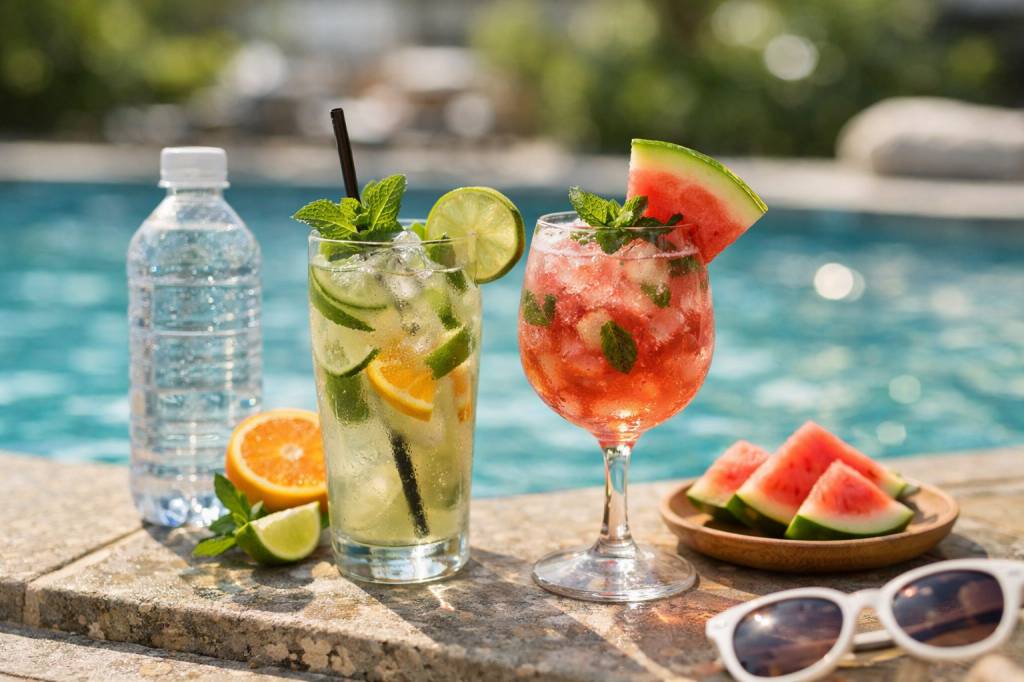
If you’ve ever ordered a “light” cocktail thinking it would secretly hydrate you, you’re not alone. Between hard seltzers, low-ABV spritzes and “electrolyte” mixers, it’s easy to believe there are alcoholic drinks that actually do your body a favor.
Let’s be clear from the start: no alcoholic drink hydrates you better than plain water. Alcohol is a diuretic, point final. That said, some drinks dehydrate you less than others, and you can absolutely build cocktails that are kinder to your body.
In this article, we’ll break down what “hydrating alcohol” really means, how your body handles booze and water together, and how to mix drinks that keep you upright the next morning instead of glued to your sofa.
What people really mean by “hydrating alcohol”
When someone says a drink is “hydrating”, they usually mean one of three things:
Those are feelings, not physiology.
Physiologically, a drink can be considered more hydrating than another if:
Even then, the alcohol in that glass still nudges your body toward losing more fluid than you take in. You might lose less overall with a light spritz than with a double whiskey, but you’re not coming out ahead like you would with actual water.
What alcohol really does to your hydration
Here’s the non-scary, bartender-friendly version of what happens when you drink alcohol:
End of the night? You’re down on both water and electrolytes, even if you drank four cocktails with lots of ice. That’s why just “drinking lots of something” at the bar doesn’t automatically mean you’re hydrated.
I learned this the hard way during a summer rooftop party in Montreal. I made giant pitchers of citrusy spritzes, thinking, “They’re mostly soda water, we’re safe.” The next morning, two friends texted me: “Amazing drink, terrible brain.” That was my wake-up call: refreshing is not the same as hydrating.
Where hydration can come from in a drink
Let’s break a cocktail down into pieces. Some parts hurt your hydration; some help a bit.
1. Alcohol (the dehydrator)
So “light” isn’t just taste — it’s about how many millilitres of pure alcohol you’re actually drinking.
2. Water and low-sugar mixers (the helpers)
Your body still gets the same total amount of alcohol, but the lower concentration + extra fluid mean less of a shock to your system.
3. Electrolytes (the support crew)
You don’t need a lab to get electrolytes into your drink:
These help your body hold onto water a bit better than plain sugar juice. But they do not cancel out the diuretic effect of alcohol. Think “slight buffer”, not “magic shield”.
4. Sugar (the double-edged sword)
So the goal is often: moderate sweetness, not syrup overload.
Common “hydrating” alcoholic drinks — and what they actually do
Let’s look at a few drinks people often assume are hydrating or “lighter”, and what’s really going on.
Hard seltzer
Reality: Better than sugary cocktails and heavy beers for hydration, but not a substitute for actual water.
Spritzes (Aperol, Campari, etc.)
Reality: Less dehydrating than a round of shots, more dehydrating than a glass of sparkling water with an orange slice. Great candidate to tweak into a more hydrating format (we’ll get there).
Beer
Reality: A light beer is usually less brutal than several strong cocktails, but don’t kid yourself — you still need water alongside.
Wine spritzer
Reality: One of the more body-friendly ways to enjoy wine, especially in hot weather, as long as you keep an eye on how many glasses you’re refilling.
“Healthy” cocktails with juice or smoothies
Reality: Your liver doesn’t give style points for the vitamin C in your screwdriver.
Drinks that are genuinely easier on your hydration
If your goal is to keep enjoying cocktails while being nicer to your body, here’s what you want to build:
Here are a few styles that tick more of these boxes:
1. Coconut water highball (low-ABV)
I started playing with this after a particularly sweaty backyard BBQ. Beer was just making everyone sluggish, so I switched gears mid-evening.
Try this template:
Build over lots of ice in a tall glass. Stir gently. You’ve got:
Does it hydrate like plain water? No. Is it kinder to your system than three margaritas? Absolutely.
2. Tomato or vegetal spritz
Serve over ice in a wine glass. This is basically a lighter, bubbly cousin of a Bloody Mary. You get:
3. Low-ABV citrus spritz
You’re basically cutting the wine out of a classic spritz and replacing it with water, while keeping the aperitif and bubbles for flavor and vibe.
How to drink in a way that supports hydration
Beyond what’s in the glass, how you drink matters just as much.
1. Alternate every drink with water
This is the unsexy tip that actually works. One alcoholic drink, one glass of water. Repeat. If you’re hosting, make water unavoidable:
When I started making water feel “designed” at my parties (nice carafes, garnishes), people actually drank it.
2. Use smaller glasses and lower pours
Switch from 60 ml (2 oz) spirit pours to 30–45 ml (1–1.5 oz). Your guests will still feel like they’re having “proper” cocktails, but the total alcohol load drops significantly.
Highballs (tall, narrow glasses with lots of ice + mixer) are your friend: more volume, less alcohol, more water.
3. Salt is not the enemy here
Salty snacks — olives, nuts, chips — help you retain a bit more water. They also encourage you to sip more water alongside your drink.
In cocktails, a pinch of salt in citrusy or herbal drinks can:
We’re talking a pinch per glass or a small amount in your batch, not turning your drink into a sports drink.
4. Use more ice — and let it dilute
People love to complain about “watery” cocktails. But dilution isn’t the enemy; it’s part of the design.
A well-diluted cocktail is easier on your system than a warm, concentrated one that’s been sitting on the table for 40 minutes.
Drinks that are especially tough on hydration
If you’re trying to be smart about hydration, there are a few formats worth limiting.
1. Neat spirits and shots
Even if you “feel fine”, your kidneys are getting a clear dehydrating signal.
2. Super-sweet tiki bombs
I love a good tiki drink, but let’s be honest: they’re not your hydration ally. If you do go tiki, match each one with at least one full glass of water and maybe choose a lighter, lower-proof option.
3. Energy drink + alcohol combos
Your body is getting mixed messages: “I’m awake!” and “I’m dehydrated!” at the same time. Not a combo I recommend.
So… are there alcoholic drinks that hydrate?
If we’re being precise, no alcoholic drink truly hydrates you in the way water does. Alcohol always pushes your body toward losing more fluid.
But if the real question is: “Are there drinks that are less dehydrating and easier on my body?” then yes, absolutely. Aim for:
Think of it this way: your job isn’t to find a magical “hydrating cocktail”. Your job is to stack the deck so each drink does the least possible damage — and to give your body plenty of actual water and electrolytes around it.
If you start building your cocktails with that mindset, you’ll enjoy your evenings the same way… but your mornings will feel very different.