
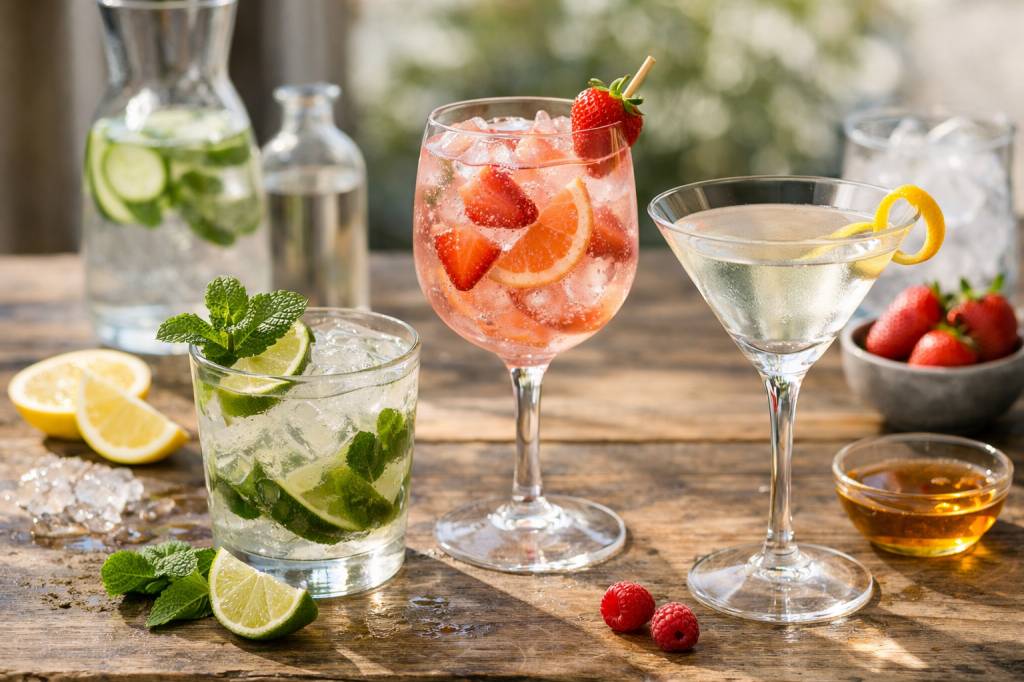
If you love cocktails but you’re trying to cut back on sugar, you’ve probably had this thought at least once: “Do I really have to choose between flavor and my blood sugar?” The short answer: no. You do, however, have to be a little smarter behind the bar.
I went through this myself. After une série de soirées très généreuses en sirop simple, j’ai fini par associer mes maux de tête du lendemain autant au sucre qu’à l’alcool. J’ai donc commencé à re-travailler mes classiques pour garder le goût, tout en allégeant les sucres ajoutés. Résultat : des cocktails plus nets, plus digestes, et franchement plus intéressants en bouche.
Dans cet article, on va voir comment construire des cocktails plus légers en sucre sans finir avec un verre triste et aqueux. On reste sur des recettes gourmandes, des astuces concrètes, et des exemples que vous pouvez tester dès ce soir.
Where does the sugar in your cocktail actually come from?
Before you “lighten” anything, you need to know where the sugar is hiding. In cocktails, it usually comes from:
- Syrups (simple syrup, flavored syrups, grenadine, gomme syrup)
- Liqueurs (triple sec, amaretto, coffee liqueur, Irish cream…)
- Juices (orange, pineapple, cranberry, packaged sour mixes)
- Sodas & tonics (cola, ginger ale, traditional tonic, lemonades)
- Purees & mixes (frozen margarita mix, piña colada mix, strawberry puree)
That’s the “visible” sugar. Then you have the less obvious part: some spirits themselves carry a bit of residual sugar, especially spiced rums, some gins with added flavoring, and a few modern “flavored” vodkas. They’re not syrupy, but the sweetness adds up if the rest of the drink is already sweet.
The good news? You don’t need to remove all sugars. Sugar has a job: it softens acidity, rounds alcohol burn, and carries flavor. The goal is to use it precisely, not drown your drink in it.
The golden rule: balance, not diet mode
When people try to go “low sugar”, they often make the same mistake: they remove the sweet component and leave everything else as is. The drink becomes harsh, thin, and unbalanced… then they give up and run back to premade mixes.
Instead, think in terms of balance:
- Classic sour structure = spirit + citrus + sugar
- If you lower sugar, you usually need to:
- Lower the acid or
- Lean on other flavor boosters (bitters, salt, aromatics)
My rule of thumb when I adapt a classic recipe:
- Start by cutting the sugar by 25–30%, not 100%
- Taste
- Adjust citrus down slightly if the drink feels too sharp
This way, you keep the structure of the cocktail but you trim the excess.
Smarten your sweeteners instead of ditching them
You don’t need to banish sugar; you just need to be more strategic with it. Two big levers:
- Use less
- Use more flavor-dense options
Here are a few swaps I use all the time:
- Rich simple syrup (2:1) instead of regular (1:1)
You dissolve 2 parts sugar in 1 part water. You use a smaller volume for the same perceived sweetness, which means:- Less dilution from the syrup
- More room in the glass for other flavors
Start with 0.25–0.5 oz rich syrup in sours instead of the classic 0.75 oz of regular.
- Honey or agave cut with water
Straight from the bottle, they’re too viscous; they won’t mix properly. Make a light syrup:- 1 part honey (or agave) + 1 part hot water
These sweeteners taste sweeter than simple syrup, so you can often get away with less. They also bring extra aroma, which helps you keep the drink interesting even if it’s “lighter”.
- Fruit as sweetener
Muddled berries, melon, or ripe peach will bring both body and natural sugar. I often do:- 2–4 raspberries or blackberries, muddled
- Add only a touch of syrup (0.25 oz) if needed
You get sweetness with fiber and flavor instead of pure liquid sugar.
What about “zero sugar” syrups and diet sweeteners? They exist, and some are ok if you like the taste. My honest take: they’re fine for the occasional highball, but in a shaken cocktail where texture and flavor matter, they can feel a bit hollow or leave an aftertaste. Test them in small doses before committing an entire pitcher.
Choose spirits that work well with less sugar
Certain spirits handle low-sugar builds better than others. When I started trimming sugar in my drinks, I realized some bottles were instant winners and others… not so much.
The easiest spirits to work with in lighter cocktails:
- Gin – Lots of botanicals, so you can build complexity with very little sweetener.
- Tequila (especially blanco) – Herbal and bright; works great with just citrus and a restrained amount of sweet.
- Dry vermouth – Lower ABV, already slightly aromatized, often with just a hint of sweetness.
- Unsweetened aperitifs / amaro with low sugar – Bitter notes allow you to reduce sugar without losing depth.
- Good quality dry rum or agricole – Naturally aromatic; you can let the sugar cane notes replace some of the sweetness you’d normally add.
Spirits that are trickier in low-sugar builds:
- Cheap vodka – Neutral and unforgiving. With low sugar, it can feel like boozy lemon water.
- Very smoky whiskies – They often need a bit of sweetness to round out the edges.
- Already sweet liqueurs – If your base is a liqueur at 200 g/L sugar, “low sugar” just isn’t the job for that bottle.
If you’re just getting started, build your lighter drinks around gin, tequila, and dry vermouth. They give you a lot of flavor for free.
Play with acidity and bitterness instead of more sugar
Here’s where cocktails get interesting. When you reduce sugar, you can’t rely on it to give you a round, “full” impression. So you bring in other tools: acid and bitterness.
A few tricks I use constantly:
- Balance lemon with softer acids
Lemon is sharp. If you use less sugar, it can start to dominate fast. Try:- Half lemon, half lime in your sour
- A splash of grapefruit juice for softer acidity
- A touch of orange juice to gently round things out
You still get freshness, but the drink doesn’t need as much sugar to stay balanced.
- Add bitters to “finish” the drink
Angostura, orange bitters, or even grapefruit bitters can:- Add perceived complexity
- Distract from the fact that there’s less sugar
- Make the drink feel more grown-up and less “mocktail with vodka”
A couple of dashes can completely transform a light cocktail.
- Use a tiny pinch of salt
Just like in cooking, a pinch of salt in your shaker can:- Boost fruit flavors
- Round the edges of acidity
- Let you cut back the sweetener slightly
I literally mean a pinch with your fingers or a few drops of 20% saline solution if you batch cocktails regularly.
The idea is simple: if you remove some sugar, you add structure elsewhere so the drink still feels complete.
Swap sugary mixers for lighter, flavorful bases
This is where you can make the biggest difference with almost no effort. If your go-to is “spirit + juice + soda”, just changing the mixer can slash sugar instantly.
Easy swaps:
- Soda water instead of soda
Obvious but powerful. If you love rum & cola, try:- Rum + soda water + squeeze of lime + a few drops of bitters
You still get a tall, refreshing drink, just not the sugar bomb.
- Dry tonic or light tonic
Many brands now offer “light” or “zero” tonic with reduced sugar. They still have quinine bitterness and some citrus aroma, which helps your drink feel like a real cocktail, not an abstinence punishment. - Cold brew tea
Unsweetened green tea, hibiscus, or earl grey make amazing bases for low-sugar highballs:- Gin + cold brew hibiscus + lime wedge
- Tequila + cold brew green tea + grapefruit twist
Tons of flavor, almost no sugar.
- Fresh citrus + water instead of bottled juice
If you usually do “orange juice + vodka”, try:- Half an orange, squeezed fresh
- Top with still or sparkling water
- Add vodka and a dash of bitters
You get brightness and aroma with less sugar per glass.
Three lighter cocktail templates that actually taste good
Let’s move from theory to practice. Here are a few structures you can adapt endlessly. I’ve tested all of these on friends who drink “normal” cocktails, and no one asked where the sugar went.
Light Citrus Gin Sour
This is my go-to when I want something fresh, tart, and not sugary.
In your shaker:
- 2 oz dry gin
- 0.5 oz fresh lemon juice
- 0.25 oz fresh lime juice
- 0.5 oz honey syrup (1:1)
- 2 dashes orange bitters
- Optional: a small pinch of salt
Shake hard with ice and strain into a chilled coupe or over a big cube. Taste: it’s bright, aromatic, with just enough sweetness to be balanced, but far less sugar than a classic sour that uses 0.75–1 oz simple syrup.
Want to go even lighter? Drop honey syrup to 0.25 oz and add an extra dash of bitters.
Fresh Tequila Highball (No Syrup Needed)
Perfect for sunny afternoons when you’d usually grab something mixed with soda or juice.
In a tall glass with ice:
- 1.5 oz blanco tequila
- 0.5 oz fresh lime juice
- Top with soda water (or light tonic if you prefer)
- Optional: 0.25 oz agave syrup if you like a touch of sweetness
Stir gently, add a lime wedge. If your tequila is good quality, you might not even feel the need for the agave—just the lime and bubbles are enough to keep it refreshing.
Variation I love: add 2–3 cucumber slices and lightly muddle them before adding ice. Super refreshing, still low in sugar.
Berry & Vermouth Spritz
Here, we lean on vermouth (lower ABV, lightly sweetened) and fresh fruit to avoid heavy syrups.
In a wine glass with ice:
- 2 oz dry vermouth
- 4–5 fresh raspberries (or blackberries), lightly muddled in the glass
- 0.25 oz rich simple syrup (2:1) only if needed
- Top with soda water or a dry sparkling wine
Gently stir. Taste first without the syrup; the berries might bring enough sweetness on their own. If the drink feels a bit too sharp or flat, then add the 0.25 oz rich syrup and stir again.
This is the kind of drink you can serve all afternoon without knocking everyone out or spiking their sugar levels.
How to adapt your favorite classics to be lower in sugar
Let’s take a few well-known cocktails and see how you can “lighten” them without ruining them.
- Margarita
Classic spec often looks like: 2 oz tequila, 1 oz triple sec, 1 oz lime, sometimes plus extra syrup.
Lighter version:- 2 oz tequila
- 0.5 oz triple sec
- 0.75 oz lime
- 0.25–0.5 oz agave syrup
You cut the liqueur (big sugar source) and control the sweetness with a smaller amount of agave. The drink will be more tequila-forward and brighter.
- Mojito
Classic specs can creep up to 1 oz or more of simple syrup.
Lighter version:- 2 oz white rum
- 0.75 oz lime juice
- 6–8 mint leaves
- 0.25–0.5 oz rich simple syrup
- Top with soda water
Muddle mint gently with lime and syrup, then add rum, ice, and soda. It’s fresher, less sticky, and you taste the rum instead of a minty lemonade.
- Whisky Sour
Many bar recipes are 2:1:1 (whisky, lemon, simple). That’s a lot of sugar.
Lighter version:- 2 oz whisky
- 0.75 oz lemon juice
- 0.5 oz rich simple syrup
- Optional: egg white for texture
- 2 dashes Angostura bitters on top
You get the body from the egg white instead of extra syrup, and the bitters add complexity that makes you forget there’s less sugar.
Practical tips if you’re hosting
At home, you’re rarely making just one cocktail. If you’re hosting and want to keep things lighter for everyone (without turning into the person who lectures about sugar all night), here’s what works well.
- Offer one “light” signature cocktail
Don’t announce it as the “low sugar option”. Just give it a good name and make sure it’s delicious. People can always reach for beer or wine if they want something else. - Batch without the sweetener
When prepping pitchers, mix:- Spirits + citrus + water/tea/soda base
Then put a small bottle of rich simple syrup or agave syrup next to the pitcher. Guests can add a barspoon or two to their own glass if they want it sweeter. That way, everyone sets their own level.
- Keep plenty of non-sugar garnishes
Citrus wedges, cucumber slices, fresh herbs, and bitters sprays go a long way toward making a simple low-sugar drink feel special.
One of my favorite hosting tricks: a “build-your-own spritz” station with:
- Dry vermouth and a light aperitif
- Soda water and light tonic
- Orange, lemon, and grapefruit wedges
- Ice and a couple of bitters bottles
People naturally make themselves lighter drinks when the base isn’t a syrupy liqueur plus juice plus soda.
How to know if your “lighter” cocktail still works
Stripping sugar from a drink is easy. Making it still taste like something you’d proudly serve is another story. I use three quick questions as a mental checklist:
- Does it taste balanced?
Not just “less sweet”, but actually pleasant from first sip to last? If your mouth tightens from acidity, you cut too much sugar or added too much citrus. - Would I order this at a bar?
If it feels like a compromise or a “diet” version, tweak again. Add a dash of bitters, swap lemon for lime, or slightly reduce the citrus. - Does the spirit still shine?
Low-sugar drinks are transparent: they expose your base spirit. If you hate what you taste, change the bottle, not the sweetener.
When a lighter cocktail is dialed in, you don’t think about what’s “missing”. You just notice that you can drink two and still feel light, clear-headed, and not destroyed by sugar. That’s the sweet spot—pun fully intended.