



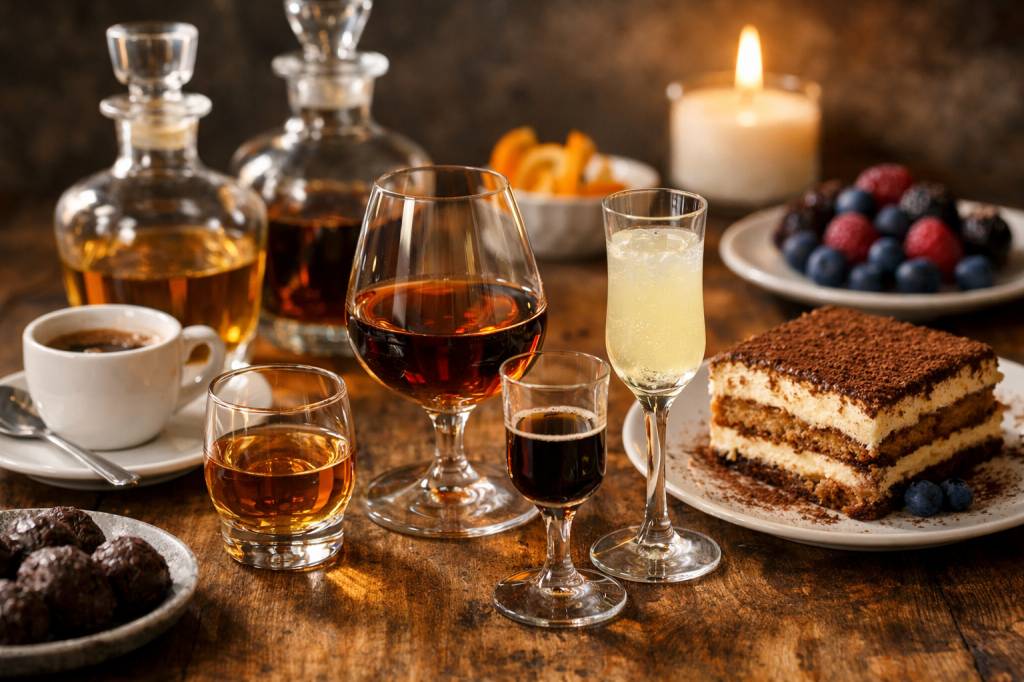
After-dinner liquors that aid digestion and pair beautifully with dessert

After-dinner liquors that aid digestion and pair beautifully with dessert

There’s a particular moment, right after a good meal, where the table se tait un peu. Les assiettes sont vides, quelqu’un pousse un léger soupir de satisfaction, et on se demande tous la même chose : est-ce qu’on passe au café, au dessert… ou aux digestifs ?

Si vous aimez recevoir, ce moment est une vraie opportunité. Bien choisi, un after-dinner liquor va :

  • aider la digestion (ou au moins donner cette impression très agréable)
  • rallonger la conversation sans assommer vos invités
  • s’accorder parfaitement avec votre dessert ou votre plateau de fromages
  • Dans cet article, on va voir quels spiritueux sortir après le repas, pourquoi ils fonctionnent bien en fin de soirée, et comment les associer simplement avec vos desserts préférés.

    What makes a good after-dinner liquor?

    Let’s start simple: what qualifies as a great after-dinner pour?

    In general, a good digestif has one (or several) of these traits:

  • Bitterness or herbal notes that can stimulate digestion
  • A slightly higher ABV (but not a palate-destroying fireball)
  • Warm, rounded flavors: spices, caramel, nuts, dried fruits, citrus peel
  • Enough complexity to be sipped slowly
  • Do they medically “aid digestion”? The science is mixed. But culturally, from Italy to France to Central Europe, bitter and herbal liqueurs have been used for centuries precisely for that moment after le gros repas. And from experience: a small glass works much better than that third serving of tart.

    Amari: the bitter-sweet Italian classics

    If you only keep one category of digestifs at home, make it the amari (singular: amaro). These Italian liqueurs are built on bitter herbs, roots, and citrus peels, balanced with sugar and a solid alcoholic backbone.

    They’re fantastic neat, on the rocks, or splashed into coffee. And they love dessert.

    Some solid bottles to explore:

  • Amaro Montenegro: Gentle, floral, orange peel, light bitterness. Great for beginners.
  • Amaro Averna: Darker, caramel, cola, citrus, moderate bitterness.
  • Amaro Nonino: More refined and grapey (it’s grappa-based), with a lovely dried-fruit note.
  • Fernet-Branca: Very bitter, minty, medicinal. Not for everyone, but unforgettable.
  • The first time I poured Fernet-Branca after un grand dîner de famille, ma tante m’a regardée comme si je venais de servir du sirop pour la toux à tout le monde. Dix minutes plus tard, la moitié de la table demandait un deuxième petit shot « pour voir si ça marche vraiment sur la digestion ». Verdict : les plats semblaient tout à coup beaucoup moins lourds.

    Pairing ideas with dessert:

  • Amaro Montenegro + citrus desserts (lemon tart, orange cake, lemon pound cake). The orange and herbal notes echo the dessert without dominating.
  • Averna + chocolate (brownies, molten lava cake, tiramisù). The cola-caramel profile melts right into cocoa bitterness.
  • Nonino + fruit tarts (pear, fig, apricot). The dried fruit and grappa character make the fruit pop.
  • Fernet-Branca + very sweet desserts (caramel cheesecake, sticky toffee pudding). The intense bitterness cuts through the sugar.
  • How to serve:

  • Pour 20–30 ml (¾–1 oz) in a small liqueur or wine glass.
  • Serve neat, slightly chilled (10–14°C / 50–57°F) or over one small ice cube.
  • Don’t overpour. It’s a digestif, not a cocktail.
  • Herbal and anise liqueurs: the old-school digestifs that actually work

    These are the bottles you may have seen in your grandparents’ cabinet and quietly avoided. Time to revisit them: bien choisis, ils sont parfaits après un repas copieux.

    Key players:

  • Chartreuse (Green or Yellow): A powerhouse herbal liqueur made by Carthusian monks with 130 botanicals. Green is stronger and more intense; Yellow is softer and sweeter.
  • Benedictine: Spiced, honeyed, with warm herbal complexity. Much rounder and more accessible.
  • Sambuca or other anise liqueurs: Sweet, licorice-forward, often enjoyed with coffee or on the side.
  • Why they help after dinner: The aromatic herbs wake up your palate when it’s fatigued by rich food. Anise and bitter herbs especially are known for their “digestive” reputation.

    Pairing ideas with dessert:

  • Green Chartreuse + dark chocolate (70% and up). Its intense herbal character stands up to real cocoa bitterness.
  • Yellow Chartreuse + crème brûlée or vanilla panna cotta. Think creamy, vanilla, eggy desserts that can handle a floral, honeyed counterpoint.
  • Benedictine + apple desserts (tarte tatin, apple crumble). The spices mingle beautifully with baked apple and butter.
  • Sambuca + coffee desserts (affogato, tiramisù, espresso-flavored ice cream). Anise and coffee is a classic combo.
  • Hosting tip: If your guests are new to Chartreuse, don’t start with a full pour. Offer a half-serve (10–15 ml) as a “tasting sip” next to their dessert. People love the feeling of discovering something special without commitment.

    Aged spirits: when “just a little something” means brandy or whisky

    Sometimes, the best digestif is simple: a well-chosen aged spirit, sipped neat. No sugar added, just barrel, time, and patience.

    Good options:

  • Cognac or Armagnac: Dried fruit, vanilla, oak, spice. Classic French end-of-meal territory.
  • Aged rum: Notes of molasses, toffee, banana, coconut, depending on origin.
  • Single malt whisky: From honeyed and fruity to smoky and peaty.
  • These don’t “aid digestion” in a herbal-medicinal way, but they do slow everything down. On se cale dans sa chaise, on sirote, et le repas se termine en douceur.

    Pairing ideas with dessert:

  • Cognac + chocolate truffles or mousse: The grape and oak complexity mirror bitter cocoa.
  • Armagnac + prune or fig desserts: The rustic, pruney character is a natural match.
  • Aged rum + banana bread, pineapple upside-down cake, coconut desserts: You basically get a tropical dessert in a glass.
  • Whisky (non-peated) + nut-based desserts (pecan pie, walnut tart, almond cake). The cereal and nutty notes play well together.
  • Peated whisky + very dark chocolate: Not for everyone, but spectacular if you like smoke.
  • Serving tips:

  • Use a small tulip or snifter glass to concentrate aroma.
  • Room temperature is best; avoid chilling.
  • For stronger whiskies, a few drops of water can open up the nose.
  • Fortified wines: gentle, forgiving, and dessert’s best friends

    If your guests aren’t heavy drinkers, fortified wines are often the best transition between dessert and the end of the meal. Lower ABV than spirits, more texture and sweetness, and easy to pair.

    Solid after-dinner options:

  • Port (Ruby, LBV, Tawny): Sweet, rich, fruity or nutty depending on style.
  • Marsala: From Sicily, with caramel, nut, and dried-fruit notes.
  • Madeira: Oxidized and heated; flavors of toasted nuts, burnt sugar, citrus peel.
  • Sherry (Oloroso, PX, Cream): From nutty and dry to intensely sweet and raisiny.
  • These aren’t “digestifs” in the bitter-herbal sense, but they are traditional after-dinner pours, especially with cheese or pastries.

    Pairing ideas:

  • Tawny Port + nutty desserts (pecan tart, baklava, walnut brownies) or blue cheese. The nutty, caramel profile is a perfect echo.
  • Ruby Port + berry desserts (berry crumble, black forest cake). Fruity, rich, jammy.
  • Madeira + anything caramelized (tarte tatin, crème caramel, canelés). The toasted notes are magic here.
  • Pedro Ximénez (PX) Sherry + vanilla ice cream: Pour a little over a scoop and you have instant “dessert cocktail”.
  • Practical advantage: Fortified wines keep much longer than regular wine once opened. A bottle of Port or Madeira can stay good for weeks if stored cool and capped, which makes them handy to have on standby for impromptu dinners.

    Light, bitter-sparkling options: for when everyone is “full but curious”

    Sometimes, after a big meal, nobody wants a heavy dessert, but personne ne dit non à « juste un petit truc ». This is where light, slightly bitter, sparkling drinks shine.

    Think:

  • Amaro + soda: A tall glass, ice, 30 ml amaro, topped with soda.
  • Brut or extra-dry sparkling wine with a bitter liqueur (a light twist on a Spritz).
  • These aren’t traditional “digestifs” but they tick many of the same boxes: bitterness, carbonation (which helps you feel less heavy), and a low-ish ABV.

    Pairing ideas:

  • Averna + soda + orange slice with a plate of small cookies (sablés, shortbread, biscotti).
  • Montenegro Spritz (Montenegro + sparkling wine + splash of soda) with fruit salad or sorbet.
  • Simple digestif cocktails you can serve without fuss

    If your guests aren’t used to sipping neat spirits, propose one or two très simples cocktails that keep the “digestive” character but feel more familiar.

    Montenegro Coffee (after-dinner coffee twist)

  • 30 ml Amaro Montenegro
  • 60 ml hot coffee
  • Optional: small spoon of brown sugar or a tiny dollop of whipped cream
  • Pour the Montenegro into a pre-warmed cup, top with hot coffee, sweeten lightly if needed. Serve next to a small square of dark chocolate.

    Why it works: Coffee is already a classic after-dinner move. Adding a gentle amaro leaves you with something warming, aromatic, and easier on the stomach than another full dessert.

    Benedictine Highball (lighter, herbal nightcap)

  • 40 ml Benedictine
  • Cold sparkling water
  • Lemon peel
  • Fill a highball glass with ice, pour Benedictine, top with sparkling water, give a light stir, garnish with lemon peel.

    Why it works: You get all the herbal complexity, but the bubbles and dilution keep it refreshing and not too boozy.

    Amaro on the Rocks with Orange

  • 40 ml Averna or Nonino
  • Large ice cube
  • Orange slice
  • Build directly in a rocks glass. It’s barely a “cocktail”, but the garnish and ice make it feel intentional, not like “just a shot”.

    How to build a small but effective digestif selection at home

    Vous n’avez pas besoin de transformer votre cuisine en bar d’hôtel. Avec 3 ou 4 bouteilles bien choisies, vous pouvez gérer 90 % des situations.

    Starter digestif lineup:

  • 1 amaro (Montenegro or Averna) for general crowd-pleasing bitterness.
  • 1 aged spirit (a good VSOP Cognac or an aged rum) for classic “just a little something” moments.
  • 1 fortified wine (Tawny Port or Madeira) for cheese plates and pastry-heavy desserts.
  • Optional: 1 “big character” bottle (Fernet-Branca or Green Chartreuse) for adventurous guests and tiny pours.
  • Glassware:

  • Small wine glasses or tulip glasses work fine for almost everything.
  • Rocks glasses for amari with ice.
  • No need for dedicated liqueur glasses unless you already own them.
  • Matching digestifs to your menu: a quick guide

    If you’re lost in the bottle jungle, partez du menu. What did you serve, and what’s on dessert? Use that as your compass.

    After a heavy, creamy or cheesy meal:

  • Go for amari or bitter herbal liqueurs (Montenegro, Averna, Fernet, Chartreuse).
  • Pair with: light desserts (sorbet, fruit salad, lemon tart) or just a few squares of dark chocolate.
  • After a rich meat-based meal (braises, roasts):

  • Choose a robust aged spirit (Cognac, Armagnac, whisky) or a complex Port.
  • Pair with: chocolate or nut-based desserts, or a cheese plate.
  • After a lighter meal (seafood, salads, veggie-forward):

  • Opt for fortified wine (Madeira, light Port, Sherry) or a bitter-sparkling combo.
  • Pair with: fruit desserts, meringues, sorbets.
  • For mixed crowds with varied preferences:

  • Offer one neat option (amaro or Cognac), one fortified wine, and one simple cocktail (amaro + soda or Montenegro coffee).
  • A few hosting mistakes to avoid with after-dinner liquors

    Quelques pièges que j’ai moi-même testés pour vous (involontairement) :

  • Serving huge pours. People are already full. Keep it to 20–30 ml (¾–1 oz). They can always ask for more.
  • Starting too strong. If your guests don’t know amari, don’t open with Fernet or straight Green Chartreuse. Begin with something softer like Montenegro or Benedictine.
  • Skipping water and coffee. Always keep a carafe of water and the option of a small coffee or tea. Digestifs should complement, not replace, hydration.
  • Forgetting non-drinkers. Offer a bitter non-alcoholic option (tonic water with lemon, a non-alcoholic bitter aperitif) so everyone a droit à son “digestif”.
  • The goal isn’t to showcase your liquor shelf. It’s to help your guests feel better after the meal, extend the good mood, and create that cozy, unhurried end-of-evening atmosphere.

    So next time you plan a dinner, think beyond the main course and dessert. A small lineup of well-chosen after-dinner liquors can turn a simple meal into a complete experience—one that se termine autour d’un dernier verre, sans lourdeur, sans chichi, juste ce qu’il faut.