



I still remember the first time I walked into Le Dokhan’s Bar in Paris. It was a Tuesday night, I was jet-lagged, and I only planned to have “one quick drink.” Three glasses of champagne and two hours later, I walked back out with a notebook full of ideas about how we can all drink more elegantly at home — without needing a Parisian hotel bar budget.
Le Dokhan’s is often described as one of the most beautiful champagne bars in Paris, and yes, it’s chic. But what interested me most wasn’t the velvet chairs or the candlelight. It was how every detail of the experience quietly encouraged you to slow down, pay attention, and actually taste your glass. That’s where the magic is.
This isn’t a travel guide. This is about what a serious champagne bar like Le Dokhan’s can teach us about the art of elegant sipping — and how to steal those ideas for your next night in, date night, or small gathering.
What makes Le Dokhan’s different from a “regular” bar
Let’s set the scene quickly, because the context matters.
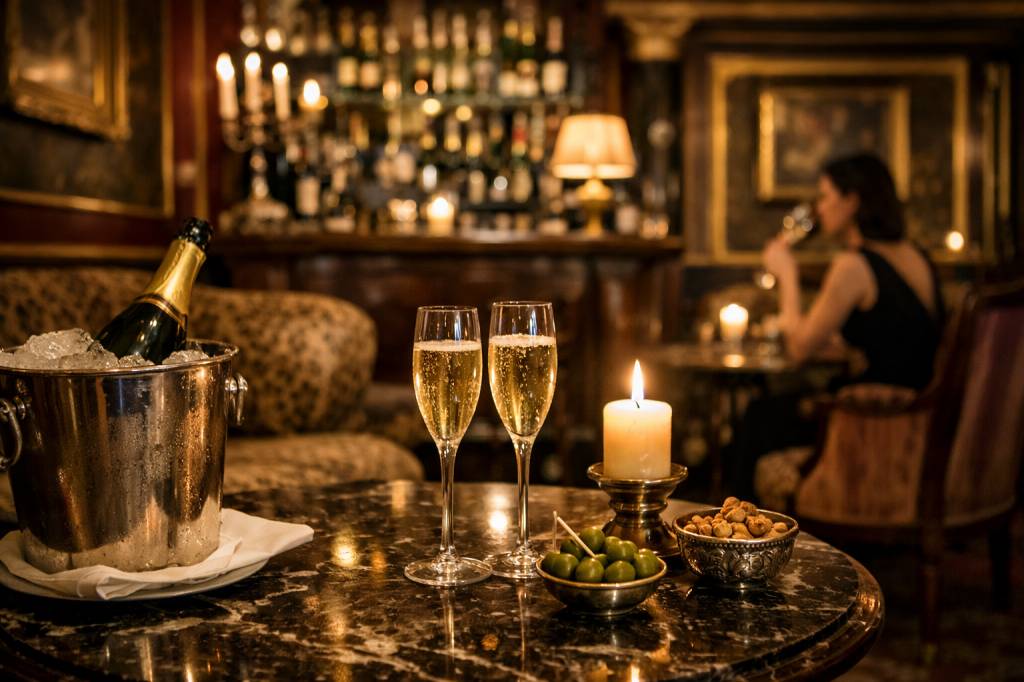
Le Dokhan’s is tucked inside a small luxury hotel in the 16th arrondissement. It feels like a salon more than a bar: low lighting, antique-style furniture, lots of texture, and a champagne list that’s clearly curated by someone who actually drinks what they buy.
On paper, it’s just: room + bottles + glasses. But here’s what stood out to me in practice:
- The pace: No one is rushing. The staff doesn’t hover, but they’re always right there when you need them. You’re meant to linger.
- The glassware: Not a single old-school coupe in sight. Mostly tulip-shaped flutes and white wine glasses, depending on the style.
- The service style: They ask what you like before suggesting a bottle or a glass — “more fruity or more mineral?”, “something bold or very delicate?”
- The menu: A mix of big names and small growers, plus a clear structure so you don’t feel lost if you’re not a champagne geek.
- The sound level: You can actually hear the person next to you. Radical concept, I know.
None of that is accidental. And all of it can be translated into your home, even if your “bar” is a tray on top of your fridge.
Lesson 1: Glassware really does change the experience
I used to think flute vs coupe vs wine glass was mostly about aesthetics. A night at Le Dokhan’s will cure you of that idea.
Here’s what you notice when the glassware is chosen for flavor, not just for looks:
- Aroma is amplified: Slightly wider tulip glasses concentrate the nose without killing the bubbles. You actually smell the champagne before you taste it.
- The bubbles feel softer: In a good tulip or white wine glass, the mousse (the texture of the bubbles) is creamier, less “spiky.” You sip, you don’t gulp.
- The wine feels more complex: Especially with vintage or blanc de blancs, a proper glass helps you pick up layers: citrus, brioche, chalk, white flowers… things you miss in a narrow flute.
What you can steal for home:
- Use what you have, but choose smartly: If you don’t own champagne flutes, use white wine glasses. They’re often better than skinny flutes, especially for complex bottles.
- Retire the coupes for serious bottles: Coupes look gorgeous in photos, but they let bubbles and aromas escape super fast. Save them for fun, sweeter drinks or Prosecco-based cocktails.
- Fill less, enjoy more: At Le Dokhan’s, pours are generous but the glass is never filled to the top. Aim for half full at home — you want room to swirl lightly and smell.
Simple rule: if you like the wine, give it a glass where it can actually express itself.
Lesson 2: Serving temperature is half the battle
If you’ve ever wondered why champagne at a bar tastes “better” than what you open at home, temperature is usually the culprit.
At Le Dokhan’s, nothing arrives icy-cold to the point of numbing your tongue. It’s chilled, refreshing, but not frozen. That small difference changes everything.
Why it matters:
- Too cold = no aroma, just acidity.
- Too warm = flat, heavy, and alcoholic.
For elegant sipping, you want the in-between. Enough chill to feel crisp, but not so much that the wine shuts down.
Practical home guidelines:
- Fridge time: 3–4 hours in the fridge is usually enough for a standard bottle.
- Freezer shortcut: If you’re in a rush, 20–25 minutes in the freezer. Set a timer so you don’t forget it (we’ve all done it).
- Ice bucket rule: Half ice, half water, 15–20 minutes and you’re ready. Water matters — it chills more evenly than just ice cubes.
- Let it warm slightly in the glass: If it feels too cold at first, just hold the bowl of the glass in your hand for a minute. Don’t be afraid to wait — champagne can actually get better as it warms a touch.
That slow warming in the glass is part of why sipping feels so elegant at a place like Dokhan’s: the wine evolves while you talk, and you notice more as you go.
Lesson 3: A good bar doesn’t just pour — it guides
What impressed me most at Le Dokhan’s wasn’t the length of the champagne list. It was the way the staff helped you navigate it without making you feel like you were taking an exam.
Instead of “What do you want?”, I got questions like:
- “Do you prefer something very dry, or a touch rounder?”
- “More fruity, or more mineral and chalky?”
- “Are you in the mood for a classic style, or do you want to discover a small producer?”
This is smart for two reasons:
- It helps you find something you’ll actually enjoy.
- It teaches you to describe what you like in your glass.
How to bring that mindset home, especially if you’re hosting:
- Ask your guests how they like to drink: Try: “Do you like very dry bubbles, or softer and fruitier ones?” before opening bottles.
- Label bottles with a short note: On a small card: “Very dry, mineral” or “Richer, toasty, more body.” It’s simple, but it helps guests choose.
- Keep one “classic” and one “discovery” bottle: For example, a well-known house and a small grower champagne. At least one will feel familiar; the other keeps things interesting.
Elegant sipping isn’t about expensive bottles; it’s about intentional choices and helping everyone around the table find their sweet spot.
Lesson 4: Elegant sipping is also about pacing
One of the quiet joys of Le Dokhan’s: nobody is rushing you to order another glass. You’re allowed to linger over one pour for a long time, and that changes how you drink.
At home, it’s easy to slide into “top-up mode,” where everyone’s glass is constantly refilled and no one really tracks how much they’re drinking or tasting.
A few pacing tricks you can borrow:
- Serve in smaller pours: 90–100 ml (about 3–3.5 oz) instead of filling the glass. Guests can always ask for more, but they’re not obligated to rush.
- Build in pauses: Open one bottle, enjoy it slowly, then take a 10-minute break before opening another. Food, a small toast, a change of music — anything that creates a natural reset.
- Use water intentionally: At Le Dokhan’s, water is just… there. Not an afterthought. Do the same at home: carafe on the table, glasses always within reach.
When the pace slows down, people start to talk more and drink more consciously. That’s exactly the kind of atmosphere that makes a simple glass of champagne feel special.
Lesson 5: Small bites, big upgrade
Another thing Le Dokhan’s understands well: champagne doesn’t want a full meal, it wants partners. Little bites that highlight its acidity, bubbles, and texture.
Nothing fancy is required. What matters is salt, fat, and texture.
Food pairing ideas you can copy with almost zero cooking:
- Salty & crunchy: Good quality potato chips, salted almonds, or cashews. Keep it simple but upgrade the product — this is not the time for stale party mix.
- Cheese with restraint: Soft triple-cream cheeses (Brillat-Savarin, Saint André), a delicate goat cheese, or a mild Comté. Avoid super pungent or blue cheeses if the champagne is delicate.
- Seafood if you want to impress: Smoked salmon on small toasts, shrimp cocktail, or simple buttered radishes with flaky salt.
- One “playful” bite: Truffle chips, parmesan shards, or gougères if you’re feeling ambitious. These echo the bready, toasty notes in many champagnes.
Think of it this way: at a bar like Le Dokhan’s, food is there to help you sip more slowly and taste more precisely. At home, aim for the same: a few well-chosen bites that keep your palate curious.
Lesson 6: Atmosphere is an ingredient too
Yes, Le Dokhan’s is beautiful. But you don’t need wood paneling and designer chairs to create an elegant sipping vibe.
What really shapes the experience:
- Lighting: Soft, indirect, never harsh. If you can see the texture of the bubbles in your glass without squinting, you’re good.
- Music: Low enough that you never have to raise your voice. Jazz, soul, or even a laid-back playlist works. Volume matters more than genre.
- Table “discipline”: No clutter. One or two bottles, glasses, a water carafe, and a couple of snacks — that’s enough. When the table isn’t overloaded, the bottle itself becomes part of the décor.
Quick at-home reset before popping a bottle:
- Clear the table.
- Dim one light, leave a warm one on.
- Put on a playlist you don’t need to touch for an hour.
- Bring out glasses and a small snack before you even open the bottle.
This sounds obvious, but when you prep like this, the transition from “day mode” to “elegant sipping mode” is immediate.
Lesson 7: Curate, don’t collect
One thing I loved about the champagne list at Le Dokhan’s: it was deep, but not chaotic. You could tell there was a logic behind it — classic houses, growers, rosés, vintages — but you didn’t feel like you had to study it to make a choice.
Most of us don’t have the space (or budget) for a huge cellar. The good news is, you don’t need one. You just need a small, curated “champagne wardrobe” that fits how you actually drink.
A simple structure you can steal:
- One “anytime” bottle: A non-vintage brut you trust and enjoy. This is for birthdays, promotions, Fridays.
- One “conversation” bottle: Usually a grower champagne or a different style (extra brut, blanc de blancs, or blanc de noirs) that sparks discussion.
- One rosé: Lovely with food and great for late afternoon or summer evenings.
- One wildcard: Could be a crémant, a quality cava, or an English sparkling wine. Something that’s not from Champagne but still delicious.
You don’t need all four at once. Think of this as a framework, not a shopping list. Having even two contrasting bottles at home (one classic, one more adventurous) is enough to turn a regular night into a tasting.
Elegant sipping, anywhere
Le Dokhan’s Paris is special — no denying it. But the real value of visiting a bar like that is what you bring back with you: an awareness that elegance in the glass is mostly about attention, not luxury.
If you remember nothing else, keep these habits:
- Choose the best glass you own for aroma, not for looks.
- Serve champagne cool, not ice-cold.
- Pour less, sip longer.
- Ask what people actually like before you open a bottle.
- Put a little thought into the snacks — salt, fat, crunch.
- Fix the lighting and sound before you fix the drink.
- Curate a tiny “sparkling wardrobe” instead of stockpiling random bottles.
You don’t need to be in a Parisian hotel bar to drink like you are. A chilled bottle, the right glass, and a bit of intention will take you surprisingly far.