




If you ask ten bartenders what the hardest cocktail is to make, you’ll probably get ten different answers… and they’ll all be right.
Not because the recipes are wildly complex, but because the “hardest” cocktail is usually the one that exposes every flaw in your technique. No fancy garnish, no smoked glass, no glitter rim can save it.
In other words: the hardest cocktail is the one that leaves you nowhere to hide.
So, what is the hardest cocktail according to bartenders?
Across interviews, bar shifts, and late-night chats with bartenders, a few usual suspects keep coming back:
- The Daiquiri
- The Martini
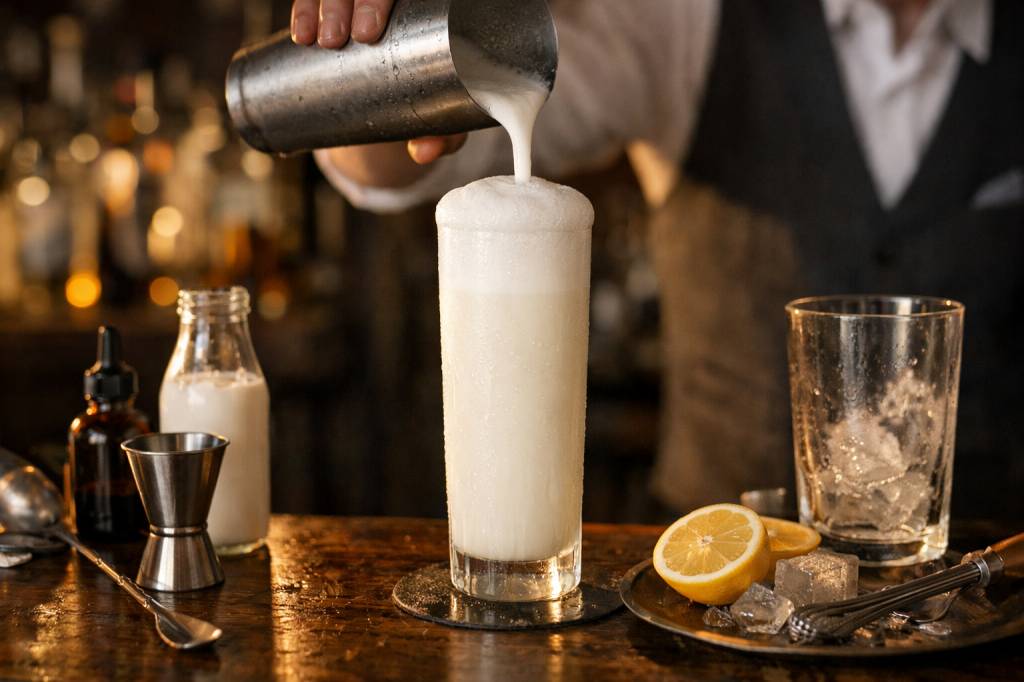
- The Ramos Gin Fizz
- The Whiskey Sour (especially with egg white)
- The Sazerac
Notice something? None of these rely on 9 ingredients or a smoke gun. They’re mostly three- or four-ingredient classics. That’s exactly why they’re so unforgiving.
I still remember my first “real” Daiquiri behind a bar. I thought: rum + lime + sugar, what could go wrong? Two minutes later I had a drink that tasted like sour syrup and regret. No balance, no structure. My mentor took one sip, pushed the glass back, and said: “Again. This time, watch the ice and don’t baby the shake.”
That’s when it clicked: the recipe wasn’t the problem. My technique was.
Why technique matters more than the recipe
If you hang out on cocktail Instagram long enough, it’s easy to believe the magic is in the ingredient list: the rare vermouth, the artisanal bitters, the micro-batch gin. All of that is fun, but if your technique is off, your premium ingredients are wasted.
Here’s what bartenders really mean when they say a cocktail is “hard”:
- It’s brutally transparent. With only 3–4 ingredients, every flaw shows: too much acid, not enough sweetness, weak shake, over-dilution… you taste it all.
- It demands consistency. Making one good Daiquiri is easy. Making 30 in a row during a rush, all tasting the same, is the real challenge.
- It punishes sloppy technique. Wrong ice, lazy shake, poor temperature control, over-stirring, under-stirring — the drink will tell on you immediately.
- It tests your palate. You have to taste and adjust on the fly, not just follow a recipe like a robot.
Let’s look at a few famous “hard” cocktails and how they reveal your habits behind the shaker.
The Daiquiri: the bartender’s lie detector
Most pros will put the Daiquiri at the top of the “hardest” list — not because it’s complicated, but because it’s pure technique in a glass.
Base recipe (a common starting point):
- 60 ml (2 oz) white rum
- 30 ml (1 oz) fresh lime juice
- 15–22.5 ml (0.5–0.75 oz) simple syrup (1:1)
That’s it. No foam, no garnish circus. Just rum, lime, and sugar — shaken hard and served up.
Why it’s hard:
- Balance is razor-thin. Your lime is more or less acidic depending on the season. Your rum has more or less sweetness depending on the brand. Your syrup might be thicker or thinner. Those tiny variations decide whether your Daiquiri is sharp and elegant… or flat and hollow.
- Shake strength and time matter. A lazy shake = under-chilled, under-diluted, aggressive acidity. An over-long shake with weak ice = watery, limp mess.
- Ice quality changes everything. Big, solid cubes vs. small, wet ones will change your dilution. Same recipe, different ice, completely different drink.
If you want to know where your technique stands right now, forget the complicated tiki builds. Make three Daiquiris in a row, taste them side by side, and see if they match.
The Martini: simplicity as a trap
The Martini looks like the easiest drink in the world. It’s also one of the easiest to ruin.
Classic template:
- 60–75 ml (2–2.5 oz) gin or vodka
- 7.5–30 ml (0.25–1 oz) dry vermouth (depending on preference)
- Stirred with ice, served up, lemon twist or olive
Sounds straightforward. But every choice you make is loud in the final glass:
- Stirring technique: Too short and the drink is warm and harsh. Too long and it’s thin and flabby. You’re chasing a narrow window of ideal dilution and temperature.
- Vermouth handling: Oxidized vermouth will ruin a Martini, no matter how expensive your gin is. If you’re not refrigerating and refreshing your vermouth, it will taste flat or funky.
- Glass temperature: Room-temp glassware kills a Martini faster than bad gin. A well-chilled coupe buys you extra time before it warms up.
The Martini is basically a test of how seriously you take the “simple” stuff.
The Ramos Gin Fizz: technique and patience
The Ramos Gin Fizz is the one many bartenders secretly hate during a rush — not because it’s impossible, but because it demands time and focus.
Base build:
- Gin
- Lemon and lime juice
- Simple syrup
- Egg white
- Cream
- Orange blossom water
- Soda water to top
Why it’s considered “hard”:
- Emulsification: Getting that thick, creamy, stable foam requires the right shaking sequence (often a dry shake, then a wet shake) and solid, confident movement.
- Texture balance: Too much cream or poor shaking gives you a heavy, cloying drink. Not enough emulsification and it’s thin and disappointing.
- Timing: Traditionally, this drink was shaken for what felt like forever (stories say up to 12 minutes in the old days with multiple bartenders). In a modern bar, you have seconds, not minutes.
This cocktail is a crash course in egg white handling, patience, and efficiency under pressure.
Why these “hard” cocktails make you a better home bartender
You don’t need to be a pro to benefit from working on these classics. Pushing yourself on a Daiquiri or Martini will quietly upgrade every other drink you make.
Here’s what they train:
- Your palate: You’ll start noticing when a drink is too sharp, too sweet, or too warm — and you’ll know how to fix it.
- Your timing: You’ll feel how long to shake or stir without a timer. Your hands will learn it before your brain does.
- Your respect for ice: You’ll stop seeing it as “frozen water” and start treating it like an actual ingredient.
- Your consistency: Suddenly that “one good drink out of three” becomes three out of three.
The invisible hero: ice, dilution and temperature
If I had to pick the number one hidden skill in cocktail making, it wouldn’t be fancy infusions. It would be understanding how ice, dilution, and temperature work together.
Every “hard” cocktail tests your control over these three factors:
- Shaken drinks (Daiquiri, Whiskey Sour): You want enough dilution to soften the acidity and alcohol, plus plenty of chill and aeration. That means strong, short shaking with solid ice.
- Stirred drinks (Martini, Sazerac): You want clarity and silkiness, not foam. Stirring is about gently bringing the drink to the right dilution and temperature without beating it up.
Next time you make a cocktail, pay attention to:
- The type of ice you’re using (big cubes vs. small, wet freezer ice)
- How long you actually shake or stir (count in your head)
- Whether your glass is chilled or warm
Make the same drink twice — once with care, once “whatever” — and compare. You’ll never underestimate technique again.
Common technique mistakes that ruin “simple” cocktails
If your cocktails feel “off” and you can’t figure out why, there’s a good chance the problem is here:
- Weak shaking: If your shake looks like you’re gently rocking a baby, your drink will taste like punishment. Commit to it. Big, confident movements, 8–12 seconds with proper ice.
- Over-stirring: Stirring for 40 seconds with wet ice will give you a room-temperature soup. Aim for about 20–30 seconds with quality ice, then taste with your straw.
- Not tasting as you go: Bartenders are constantly tasting (with straws, spoons, or a quick dip). If you never taste, you’ll never adjust.
- Ignoring citrus variability: Lime and lemon are not constant. One day they’re sharp, the next they’re mellow. Adjust your syrup slightly instead of treating the recipe like gospel.
- Old vermouth: An oxidized vermouth will wreck any Martini or Manhattan. Buy smaller bottles, keep them in the fridge, and finish them within a few weeks.
How to actually practice technique at home
You don’t need a full bar setup to train like a bartender. You just need repetition and a bit of curiosity.
Try this mini “training plan” over a few weekends:
- Session 1: The Daiquiri Lab
- Make three Daiquiris with the same rum and lime, but change only the syrup:
- 0.5 oz syrup
- 0.75 oz syrup
- 1 oz syrup
- Taste side by side. Notice how much sweetness you actually like — and how it changes the structure.
- Make three Daiquiris with the same rum and lime, but change only the syrup:
- Session 2: The Stirring Test
- Make two Martinis with the same ratios.
- Stir the first for 15 seconds, the second for 30 seconds.
- Taste them back to back: which is colder, smoother, more balanced?
- Session 3: The Ice Experiment
- Make the same shaken cocktail twice:
- Once with big, solid cubes.
- Once with small, wet, half-melted freezer ice.
- Compare temperature, texture and flavor.
- Make the same shaken cocktail twice:
This kind of simple, focused practice will do more for your cocktails than buying a new bottle “just because TikTok said so.”
When flair doesn’t matter (and when it does)
I love a good garnish moment as much as anyone — citrus oils, herb sprigs, clear ice spheres… it’s all part of the pleasure. But here’s the order that matters:
- First: build, balance, temperature, dilution.
- Then: garnish, glassware, presentation.
If your Daiquiri is over-diluted and unbalanced, it doesn’t matter how perfect your lime wheel looks. On the other hand, once your technique is solid, those small aesthetic touches take the drink from “good” to “I want to take a picture before I sip this.”
Bartenders know this. It’s why they obsess over ice and shaking long before they worry about Instagram.
So… what should you master first?
If you want to level up your home bartending, start with three “hard” classics and really own them:
- The Daiquiri – for shaking, balance, and citrus management.
- The Martini – for stirring, temperature control, and vermouth handling.
- The Whiskey Sour (with egg white) – for egg technique, texture, and foam.
Once you can make those three consistently delicious, you’ll notice something: suddenly, everything else feels easier. Margaritas, Sidecars, Gimlets, Sours, Fizzes — they all follow the same logic.
And the next time someone asks, “What’s the hardest cocktail to make?”, you’ll have a better answer than just naming a drink. You’ll know it’s really a question about technique, repetition, and how much you’re willing to pay attention to the “boring” details.
Because behind every “wow” cocktail there’s a lot of invisible work: the right shake, the right stir, the right ice, the right taste check at the right time.
Start there. Master the basics. Then you can play with all the glitter you want.